Investors looking to add silver to their portfolios often face the choice between
silver bars and silver coins. Both forms hold intrinsic value but differ in aspects like price premiums, liquidity, and ease of storage.
Choosing between silver bars and coins depends largely on the investor’s goals, with bars generally offering lower premiums, while coins provide better liquidity and sometimes added collectible value.

Silver bars are favored for their cost efficiency, as they often come with lower premiums over the spot price, making them ideal for bulk buying and long-term storage. In contrast, silver coins, especially government-backed ones, tend to be easier to trade and may carry numismatic or collector interest that can add to their value.
Understanding the trade-offs between these options helps investors make informed decisions. This article will explore the key pros and cons of silver bars versus silver coins to clarify which option suits different investment strategies best.
Understanding Silver Bars and Silver Coins
Silver bars and silver coins have distinct characteristics that impact their use and value. Their differences stem from factors like design, production, and market appeal, affecting investment strategies and practical handling.
Definition of Silver Bars
Silver bars are typically rectangular pieces of refined silver offered in a range of weights, from small 1-ounce bars to large 100-ounce bars. They are valued primarily for their metal content, often produced by private mints or refineries.
These bars usually have a lower premium over the spot price of silver compared to coins, making them cost-effective for bulk investments. Their simple design focuses on purity and weight markings rather than aesthetics.
Storage of silver bars is straightforward because of their uniform shape, allowing stacking and space-efficient organization. However, their resale depends mainly on silver content rather than collectibility.
Definition of Silver Coins
Silver coins are minted pieces usually produced by government mints and carry legal tender status. They often feature intricate designs and commemorate historical figures, events, or symbols.
Coins typically come in smaller denominations such as
1 ounce and have a higher premium compared to bars due to their official backing, craftsmanship, and sometimes limited mintage. They appeal both to investors and collectors.
Coins are easier to liquidate in small amounts because of standardized weight and broad recognition. Their aesthetic and numismatic value sometimes make them attractive beyond simple silver content.
Key Differences Between Bars and Coins
| Feature |
Silver Bars |
Silver Coins |
| Weight Range |
Very flexible; small to very large |
Usually in fixed weights, mostly 1 oz |
| Premiums |
Lower premiums, especially on larger bars |
Higher premiums due to design and minting |
| Design |
Plain, focused on purity and weight |
Detailed, collectible designs and official markings |
| Liquidity |
Best for bulk sales |
Easier to sell in smaller quantities |
| Storage |
Compact and stackable |
Often stored in protective cases due to collector value |
Both bars and coins provide ways to
invest in silver, but their characteristics influence cost, resale potential, and practical use in a portfolio.
Advantages of Investing in Silver Bars
Silver bars are a
cost-effective choice for investors prioritizing value and storage efficiency. They minimize extra charges associated with production and design, making them ideal for those seeking to maximize silver content per dollar. Bars also simplify managing larger quantities of silver.
Lower Premiums Over Spot Price
Silver bars typically carry lower premiums above the spot price compared to coins. This is because bars have less intricate design and lower manufacturing costs. Investors benefit from paying closer to the actual silver value.
Lower premiums translate to better overall cost efficiency, especially for those buying significant quantities. The reduced markup means more silver for each dollar spent, which can impact long-term returns favorably.
This cost advantage makes silver bars appealing to investors focused on accumulating precious metals without paying extra for collectible or aesthetic features.
Ease of Bulk Storage
Silver bars usually come in
standardized shapes and sizes, making them easier to stack and store compared to coins. Their uniformity allows for
efficient use of storage space whether kept in home safes or professional facilities.
Bars are often available in
larger weights, such as 10 oz, 100 oz, or even 1,000 oz, which reduces the number of individual pieces an investor must manage. This consolidates physical holdings and simplifies inventory tracking.
The compact nature of bars helps
reduce storage costs and logistical complexities, particularly for investors with larger portfolios.
Efficiency for Large Investments
For investors purchasing silver in bulk, bars offer a practical and economical solution. Larger bars mean fewer transactions and less handling, reducing overall transaction fees.
They also facilitate easier price comparison since premiums and prices tend to be more stable and transparent. Investors can directly assess the silver content and cost without factoring in numismatic value.
As investment amounts grow, silver bars streamline portfolio expansion and management, enabling an efficient accumulation of physical silver assets.
Advantages of Investing in Silver Coins
Silver coins offer specific benefits that appeal to many investors. Their legal status, ease of resale, and collectible nature often make them more flexible than bars for those looking to buy or sell smaller amounts or add unique pieces to a portfolio.
Recognized Legal Tender Status
Silver coins are often issued by governments and carry an official face value, establishing them as recognized legal tender. This status can enhance buyer confidence because the coins are guaranteed by the issuing authority.
Though the face value is typically much lower than the metal’s market value, the legal tender status helps prevent acceptance issues during transactions. It also ensures authenticity checks by dealers and institutions are more straightforward.
Additionally, certain government-minted coins include anti-counterfeiting features, making them a safer investment against fraud compared to generic silver bars.
Higher Liquidity and Resale Options
Silver coins are generally easier to sell in
smaller quantities compared to bars. Investors can liquidate part of their holdings without needing to sell large chunks all at once, which enhances flexibility.
Coins tend to have higher demand from both investors and collectors, which supports faster resale. This makes them more liquid in most markets globally.
They are available in standardized weights and widely recognized designs, which buyers often prefer when compared to less familiar bars. This familiarity keeps the resale market active and more accessible.
Collectibility and Numismatic Value
Many
silver coins carry
numismatic value beyond their silver content. Limited editions, historical significance, or unique designs can increase their worth over time.
This potential for appreciation adds a layer of diversification beyond pure bullion investment. Collectors may pay premiums far above the metal’s spot price for rare or desirable coins.
Such coins can provide an investment edge for those knowledgeable about coin grading and market trends. However, not all coins carry numismatic value, so investors should research carefully before purchasing for this purpose.
Disadvantages of Silver Bars
Silver bars come with
specific drawbacks that investors should carefully consider before purchasing. Their liquidity tends to be lower, they face risks related to counterfeiting, and often require a higher initial amount of capital to acquire.
Limited Liquidity Compared to Coins
Silver bars generally have less liquidity than silver coins. This is because bars are typically larger in size and weight, making them harder to sell in smaller increments. Investors looking to liquidate small portions of silver may find bars less flexible since breaking a bar into smaller parts usually isn’t practical or economical.
Additionally, coins are often more recognizable and trusted by dealers and buyers, which facilitates quicker transactions.
Potential for Counterfeiting
Silver bars carry a
higher risk of counterfeiting compared to government-issued coins. Bars produced by minting companies without strong brand recognition may lack secure anti-counterfeit features such as intricate designs, serial numbers, or government backing.
This means buyers need to verify authenticity carefully, using tools such as professional appraisals, electronic testers, or purchasing only from reputable sources.
Higher Minimum Investment
Silver bars frequently require a
larger minimum investment because they are sold in heavier weights starting around 1 ounce or more. For example, a standard silver bar is commonly 10 ounces or larger, which can represent a significant upfront cost.
This higher entry point can be a barrier for new or small-scale investors who prefer to buy in smaller, more affordable increments. Coins and smaller bars offer more flexibility in purchasing smaller amounts.
Disadvantages of Silver Coins
Silver coins often come with higher costs and require careful handling. They also need more
secure storage compared to other forms of silver, which can complicate ownership for some investors.
Higher Premiums Over Spot
Silver coins generally carry higher premiums above the spot price compared to silver bars. This premium covers manufacturing costs, design intricacies, and sometimes a collectible or numismatic value.
For investors focused solely on the silver content, these added costs can reduce profit margins. Premiums vary by coin type and mint; government-issued coins often have fixed premiums, while private mints may charge more.
These costs can make large-volume purchases less economical than buying bars, especially for those prioritizing metal weight over aesthetics.
Storage Space Considerations
Silver coins take up more physical space than bars when storing equal amounts of silver. They are usually packaged individually or in small batches, requiring careful arrangement to avoid damage.
Investors must consider secure, organized storage solutions to protect coins from scratches, dings, or environmental damage. Coin holders, capsules, or cases add extra bulk.
The need for specialized storage increases handling complexity and, in some cases, overall storage costs. This can be a drawback for those with limited space or a preference for compact, stackable investments.
Condition Sensitivity and Handling
Silver coins are sensitive to handling because their condition directly impacts
resale value. Touching coins without gloves can leave fingerprints or cause tarnish.
Collectors and investors alike must handle coins carefully to preserve “
mint state” condition. Even minor damage or surface imperfections can significantly reduce a coin’s premium and desirability.
This sensitivity demands more attention during storage and transport, limiting how frequently coins can be moved or inspected without risking value loss.
Factors to Consider When Choosing Between Silver Bars and Coins
Choosing between silver bars and coins depends on various practical and financial factors. These include the investor’s
intended use, how much money they want to spend, the space and security available for storage, and current market movements affecting resale value.
Investment Goals
The purpose behind buying silver strongly influences the choice. Investors focused on pure metal accumulation often prefer silver bars for their lower premiums and straightforward value. Bars provide a cost-effective way to hold large amounts of silver.
Collectors or those seeking
government-backed assets usually lean toward silver coins. Coins often carry additional numismatic value beyond spot silver prices, especially if they come from reputable mints or have limited releases.
For liquidity, coins are generally easier to sell in smaller amounts. Bars tend to require selling larger increments, which might not suit investors needing frequent access to cash.
Available Budget
Budget constraints directly impact the decision between bars and coins. Silver bars typically have lower premiums per ounce, making them better for investors aiming to maximize silver quantity on a limited budget.
Smaller denomination silver coins might entail higher premiums but allow flexibility in incremental purchases. Customers with smaller budgets can scale their investments gradually using coins.
For significant
bulk purchases,
large silver bars (e.g., 100 oz) provide more silver for the same outlay than individually priced silver coins. However, upfront costs for large bars can be a barrier for beginners.
Storage and Security
Storage needs differ based on silver form and volume. Bars are compact and stackable, which simplifies storage when holding large quantities. They often fit securely in safes or vaults designed for bulk metal storage.
Silver coins require careful handling to maintain condition, impacting storage choices. Protective cases or capsules are often necessary to avoid damage that could reduce a coin’s value.
Security considerations include potential theft risk and insurance costs. Smaller coins might be easier to conceal, while large bars, though straightforward to store, can attract attention due to their size.
Market Trends
Market conditions affect the relative attractiveness of bars and coins. In times of high demand, premiums on coins tend to rise more sharply than those for bars, reflecting collectible interest.
Government-issued silver coins often benefit from recognized authenticity and legal tender status, which can enhance resale potential during market swings.
Silver bars’ value tracks more closely with spot silver prices, so investors looking to mirror silver’s market trends may prefer bars for their straightforward pricing.
Liquidity trends also matter. Coins are generally more liquid in retail markets because they can be sold in smaller amounts, while bars might require finding buyers for larger quantities at once.
Long-Term Performance and Market Demand
Silver bars and coins demonstrate distinct characteristics in value retention, liquidity, and response to external factors. These qualities influence their performance and demand in the market over time.
Historical Price Trends
Silver bars generally track the spot silver price closely, as their value is based on weight and purity with minimal premiums. This makes their long-term price trends relatively stable and predictable, matching silver’s commodity market movements.
Silver coins, however, can experience price fluctuations influenced by collector demand, rarity, and condition. These factors may cause coins to carry premiums above spot price, which can either enhance or reduce returns depending on market interest.
Investors seeking exposure to silver’s base metal value typically prefer bars, while those interested in potential numismatic appreciation might lean toward coins.
Sell-Back Options
Silver coins often offer better liquidity due to high market demand and broad recognition. Popular coins like the American Eagle or
British Britannia are widely accepted by dealers, facilitating easier and quicker sell-back processes.
Bars, on the other hand, might require more verification upon resale, particularly if they are less well-known brands or lack certification. Although bars can often be sold at spot price plus a small premium, their sell-back liquidity can be slightly lower than that of coins.
Both forms of silver have active markets, but coins generally provide a more straightforward exit for smaller investments.
Influence of Global Events
Global economic events affect silver bars and coins similarly, as both depend on
silver’s commodity price. Factors like inflation, currency fluctuations, and geopolitical instability typically increase demand for silver as a hedge.
However, coins may gain additional demand during times of economic uncertainty due to their government backing and perceived security. Bars benefit from bulk-buying trends when investors anticipate prolonged market volatility or inflationary pressures.
Both types react to shifting global circumstances, but coins often see sharper demand spikes linked to immediate market sentiment.
Conclusion
Silver bars and silver coins each offer unique advantages depending on an investor’s needs. Bars tend to be more cost-effective with lower premiums, making them suitable for those prioritizing volume and value.
Coins provide greater liquidity and recognition, often backed by governments, which can be important for ease of resale and trust. They also tend to have
collectible appeal, which may add value beyond metal content.
Investors should weigh factors such as
storage,
divisibility, and
tax considerations. Bars usually require more careful storage and may be less divisible. Coins, on the other hand, are easier to handle in smaller amounts.
| Aspect |
Silver Bars |
Silver Coins |
| Premium Cost |
Generally lower |
Usually higher |
| Liquidity |
Less liquid |
More liquid |
| Government Backing |
Rare |
Common |
| Storage |
Requires secure storage |
Easier to store and transport |
| Collectible Value |
Minimal |
Possible |
The choice depends on personal goals—whether focus lies on cost-efficiency, ease of trade, or potential collectible value. Both remain valid investment options and can complement different
portfolio strategies effectively.

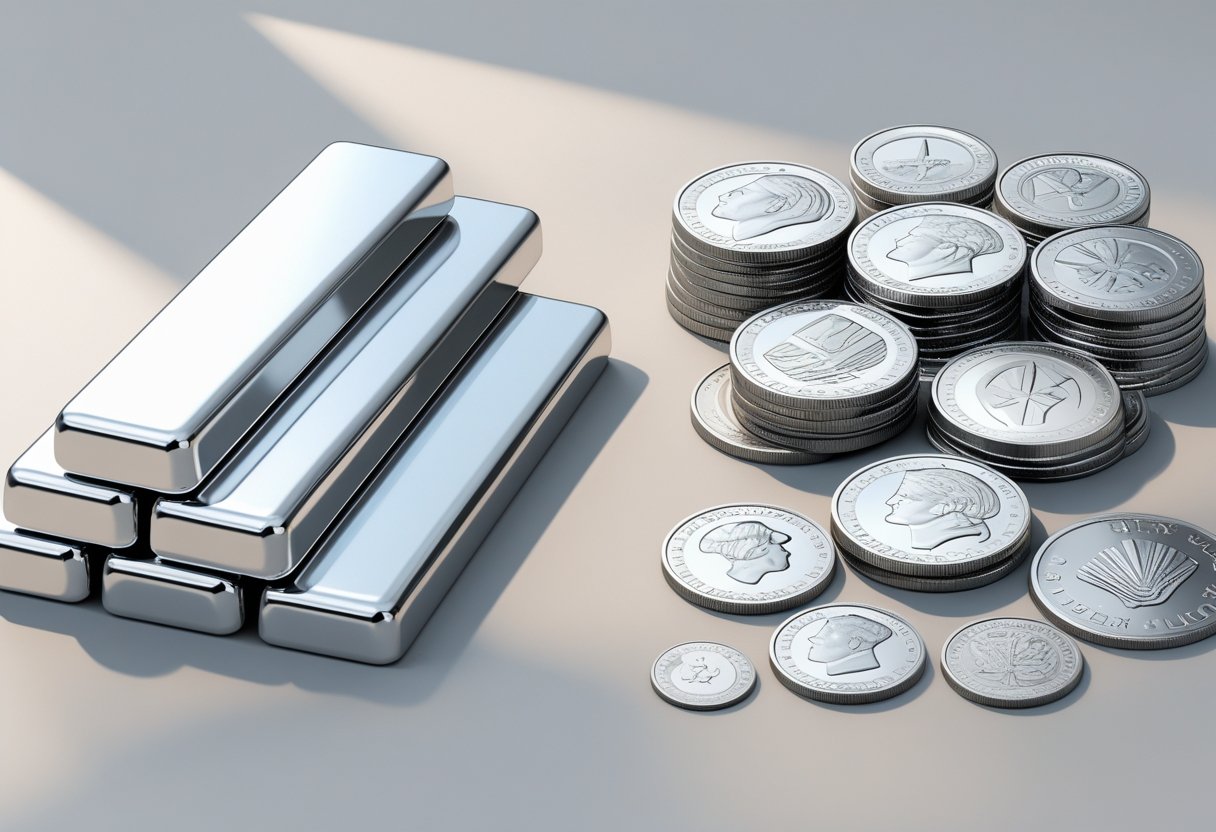 Silver bars are favored for their cost efficiency, as they often come with lower premiums over the spot price, making them ideal for bulk buying and long-term storage. In contrast, silver coins, especially government-backed ones, tend to be easier to trade and may carry numismatic or collector interest that can add to their value.
Understanding the trade-offs between these options helps investors make informed decisions. This article will explore the key pros and cons of silver bars versus silver coins to clarify which option suits different investment strategies best.
Silver bars are favored for their cost efficiency, as they often come with lower premiums over the spot price, making them ideal for bulk buying and long-term storage. In contrast, silver coins, especially government-backed ones, tend to be easier to trade and may carry numismatic or collector interest that can add to their value.
Understanding the trade-offs between these options helps investors make informed decisions. This article will explore the key pros and cons of silver bars versus silver coins to clarify which option suits different investment strategies best.
 Silver bars and silver coins have distinct characteristics that impact their use and value. Their differences stem from factors like design, production, and market appeal, affecting investment strategies and practical handling.
 Silver bars are a cost-effective choice for investors prioritizing value and storage efficiency. They minimize extra charges associated with production and design, making them ideal for those seeking to maximize silver content per dollar. Bars also simplify managing larger quantities of silver.
 Silver coins offer specific benefits that appeal to many investors. Their legal status, ease of resale, and collectible nature often make them more flexible than bars for those looking to buy or sell smaller amounts or add unique pieces to a portfolio.
 Silver bars come with specific drawbacks that investors should carefully consider before purchasing. Their liquidity tends to be lower, they face risks related to counterfeiting, and often require a higher initial amount of capital to acquire.