Gold often rises in value during times of crisis because people look for safe places to keep their money. When economies struggle with inflation, recessions, or uncertainty, many turn to gold as a reliable store of value. Gold’s price tends to increase when other investments, like stocks, fall or become risky.
Historically, gold has shown steady gains during most major recessions and periods of inflation. Its unique qualities and limited supply make it a preferred choice for protecting wealth when markets are unstable. This stability attracts investors who want to reduce risk and preserve their assets in tough economic times.
Understanding Gold as a Safe Haven Asset

Gold’s role during times of economic crisis is tied to its long history, unique qualities, and how investors respond to uncertainty. Its value often rises when other investments fall, making it a key option for protecting wealth.
Definition and Historical Importance
Gold is a precious metal that has been valued for thousands of years. It is often called a “safe haven” because it keeps its value or grows when other assets like stocks or currencies lose value. Historically, gold has been used as money and a store of wealth across many cultures.
During major crises, such as financial crashes or wars, gold’s price tends to rise. This is because it does not rely on any government or company, making it less vulnerable to financial troubles. Its scarcity and physical nature make it a reliable asset in uncertain times.
Comparison to Other Safe Haven Assets
Compared to stocks, bonds, or real estate, gold behaves differently in crises. Stocks and bonds depend on company profits or government stability, so they often drop in value when there is economic trouble. Real estate can lose value if the market is weak.
Gold, however, usually rises or remains stable during these periods. Unlike government-issued currencies, gold is not affected by inflation or devaluation in the same way. It is also more liquid than some physical assets, meaning it can be easily bought or sold worldwide.
| Asset Type | Crisis Performance | Stability | Liquidity |
|---|---|---|---|
| Gold | Increases or stable | High | High |
| Stocks | Drops | Low | High |
| Bonds | Drops | Medium | Medium |
| Real Estate | Varies | Medium | Low |
Market Perceptions and Investor Behavior
Investors often turn to gold when they lose confidence in other markets. This behavior is driven by both history and psychology. Gold is seen as a safe place to park money against risks like inflation, currency weakening, or economic collapse.
Cultural factors also play a role. Many people trust gold because it has held value across centuries and countries. This trust causes more buying during uncertain times, which pushes prices up even further.
Financial institutions and governments may also add gold to their reserves during crises. This action signals safety to their stakeholders and helps stabilize wealth in unstable environments.
Factors Driving Gold Price Increases During Crises

Gold prices tend to rise sharply during economic turmoil due to several key reasons. Changes in financial confidence, money value, and global tensions all push investors to seek safety. Understanding these factors helps explain why gold remains a strong choice in uncertain times.
Economic Instability and Uncertainty
When economies weaken, stock markets often fall, and businesses struggle, many investors turn to gold. It is seen as a safe place to keep value. During the 2008 financial crisis, for example, while stocks lost over 50% of their value, gold prices increased by more than 25%.
Uncertainty about job security, banking stability, or government actions makes gold attractive. People buy gold to protect their money from losses in other investments. This increased demand pushes gold prices higher.
Currency Fluctuations and Inflation
Gold is often used to hedge against currency drops and inflation. When a country’s currency loses value, gold prices in that currency tend to rise. Inflation erodes the purchasing power of money, but gold typically keeps its worth or increases in price.
Central bank policies that increase money supply during crises can weaken currencies. For investors, gold provides a reliable store of value. For example, fears of inflation during economic crises have caused gold prices to surge as people move funds away from unstable currencies.
Geopolitical Events and Global Tensions
Wars, political conflicts, and global unrest cause fear and uncertainty about the future. These situations can disrupt trade and markets, making gold more appealing as a low-risk asset.
In times of geopolitical stress, governments and investors increase gold buying to safeguard wealth. This leads to higher demand and rising prices. Gold’s universal value and liquidity make it a top choice during such events, ensuring it holds steady when many other assets do not.
Historical Analysis of Gold Performance in Crisis Periods

Gold has consistently acted as a store of value during economic turmoil. Its price changes reflect the level and type of crisis, including financial crashes and global health emergencies. Examining specific events helps clarify gold’s role in preserving wealth.
The 2008 Financial Crisis
During the 2008 crisis, gold’s price rose by more than 25%. This increase came as the S&P 500 index lost over half of its value between 2007 and 2009. Investors sought gold to protect against stock market losses and financial uncertainty.
Gold’s rise was driven by fears of economic collapse and inflation due to stimulus measures. It was seen as a safer asset compared to volatile equities and unsecured debt. This pattern reinforced gold’s image as a crisis hedge.
COVID-19 Pandemic Impact
The COVID-19 pandemic caused major shifts in global markets and gold prices. As lockdowns started in early 2020, gold prices spiked sharply, reaching record levels. Uncertainty about economic recovery and government responses increased demand for gold.
Inflation concerns and supply chain disruptions further pushed gold’s value upwards. During this time, gold outperformed many traditional investments, proving its appeal in health-related and economic crises alike.
Previous Recessionary Environments
Historically, gold has performed well in most recessions since the 1970s. For example, during the 1973-1975 recession, gold prices jumped by 87%. However, its performance varies. In the 1980-1982 downturn, the gain was only 1.6%.
This variation depends on the depth of the recession and inflation levels. Gold’s effectiveness as a hedge is highest when inflation rises alongside economic decline. Investors often turn to gold when other assets lose value or become too risky.
| Period | Price Change | Notes |
|---|---|---|
| 1973-1975 | +87% | High inflation and economic shock |
| 1980-1982 | +1.6% | Less inflation during recession |
| 2007-2009 | +25% | Financial crisis and market crash |
| 2020 (COVID-19) | Record highs | Pandemic uncertainty and inflation |
Mechanisms Behind Gold’s Value Appreciation
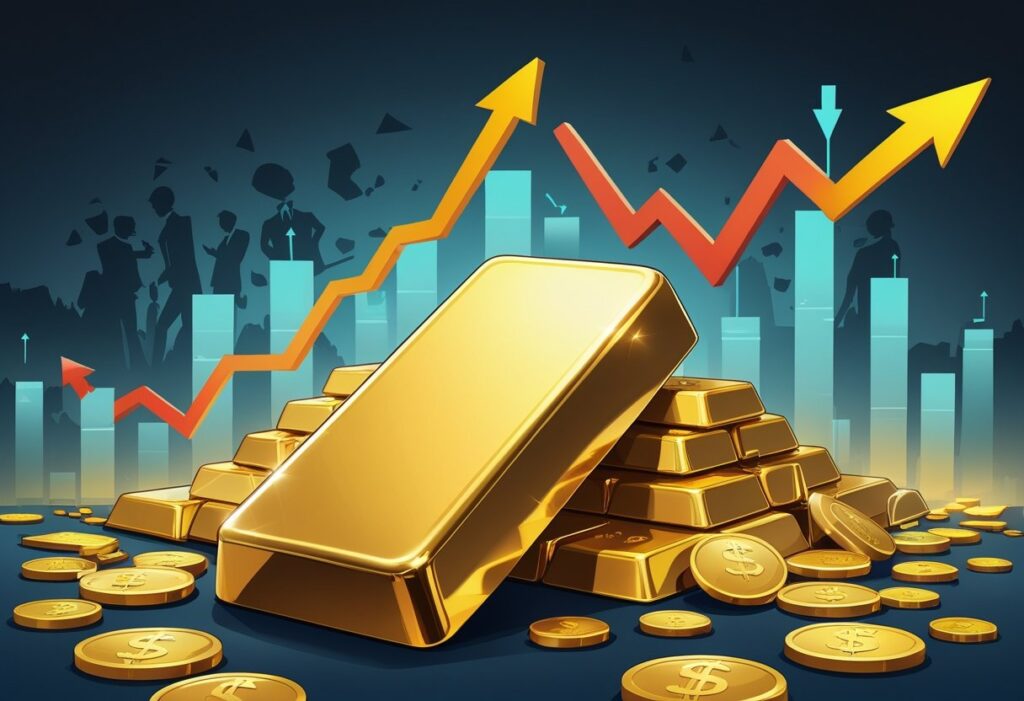
Gold’s value rises due to changes in supply and demand, shifts in central bank actions, and fluctuations in market liquidity. These factors work together during crises to push gold prices higher.
Supply and Demand Dynamics
Gold’s supply is limited by mining output and physical availability. During crises, mining disruptions and delivery delays can reduce supply. At the same time, demand typically rises sharply as investors buy gold for safety.
Physical gold demand in key markets often exceeds supply, creating shortages. This pushes up prices and premiums on coins and bars. Increased global interest in gold as a safe asset also inflates demand.
The balance between supply constraints and rising demand puts strong upward pressure on gold prices.
Central Bank Policies and Gold Reserves
Central banks influence gold prices by adjusting their reserves. When economic uncertainty rises, many central banks increase gold purchases to strengthen their reserves.
Buying gold helps protect against currency risks and inflation. This increased demand from central banks can cause prices to surge.
Some banks also reduce reliance on other assets like foreign currency. Their shift toward gold as a stable asset impacts global gold markets and supports higher prices.
Gold Market Liquidity
Liquidity refers to how easily gold can be bought or sold without large price changes. During crises, liquidity often tightens as market participants hesitate or face logistical issues.
Transport and refining delays add to these liquidity problems. Reduced liquidity means smaller trades can move prices up more sharply.
Limited availability in physical markets also restricts the flow of gold. Together, these liquidity challenges help push gold’s value higher during times of turmoil.
Investment Strategies Related to Gold in Times of Crisis
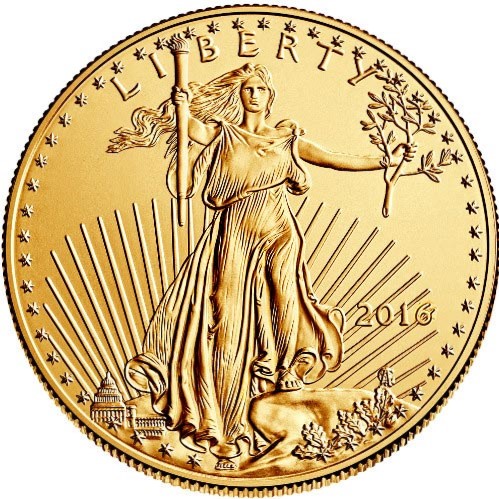
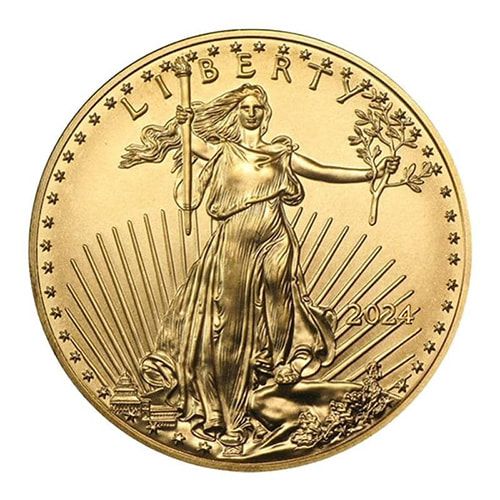
1 oz American Gold Eagle Coin (Random Year)
Investors often use gold to protect wealth during economic trouble. Deciding how to invest in gold, balancing it within a portfolio, and understanding risks are critical for making informed choices.
Physical Gold vs. Gold Securities
Physical gold includes bars and coins. It offers direct ownership and can act as a tangible store of value during crises. However, it requires secure storage and insurance, which adds cost and complexity.
Gold securities, like gold ETFs or mining stocks, provide easier access and liquidity. They allow investors to buy and sell gold-related assets without handling the metal. These options carry market risk, counterparty risk, and fees but are more convenient for trading in and out short term.
Investors must choose based on their needs: physical gold for long-term security or securities for flexibility and liquidity.
Portfolio Diversification with Gold
Gold often moves independently from stocks and bonds. Adding gold to a portfolio helps reduce overall risk during market downturns. This diversification can smooth out losses from other assets.
A typical recommendation is allocating 10-25% of a portfolio to gold in times of uncertainty. The exact amount depends on risk tolerance and investment goals.
Investors should balance gold with other assets to ensure growth potential while protecting against inflation, currency decline, or financial crisis.
Risks and Considerations
Gold prices can be volatile and affected by factors like interest rates, currency strength, and geopolitical events. Its price may not always rise in every crisis, so timing is important.
Physical gold has risks related to theft and storage costs. Gold securities face market fluctuations and may not track gold prices perfectly.
Investors should consider liquidity needs, costs, and market conditions before adding gold to their portfolio. Careful planning helps avoid unexpected losses or illiquid positions.
Recommended products
-

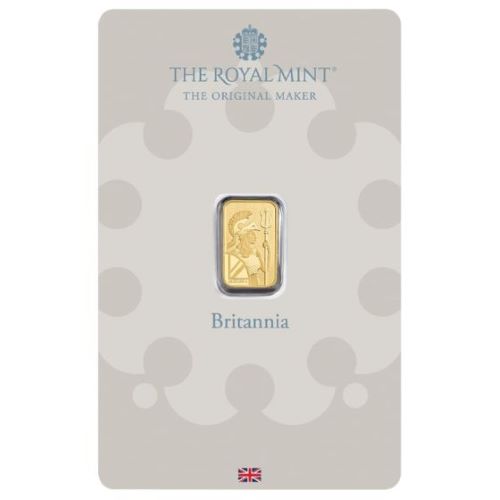
1 gram Royal Mint Britannia Gold Bar
$208.22 Validate Your Address -
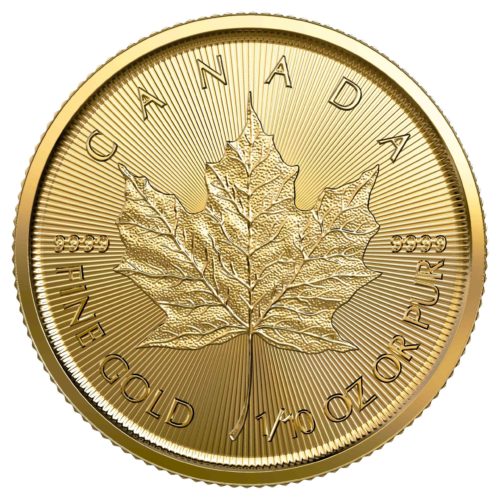
1/10 oz Canadian Gold Maple Leaf (BU)
$521.18 Validate Your Address -
American Gold Eagle 1/2 oz 2024
$2,449.46 Validate Your Address -
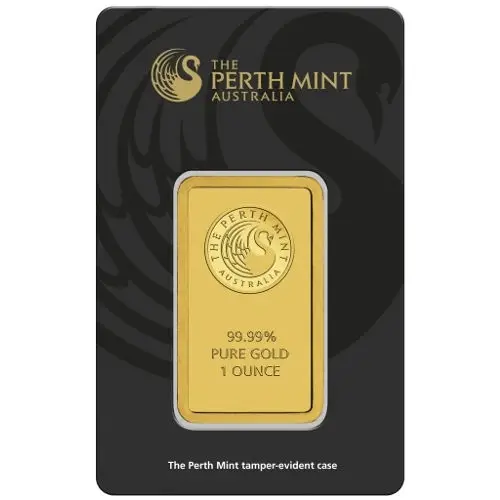
1 oz Perth Mint Gold Bar (sealed w/ assay and serial number)
$4,495.63 Validate Your Address
Global Perspectives on Gold During Economic Turmoil

Gold demand shifts widely depending on the region, shaped by cultural habits and local economic conditions. Institutional actions and international markets also play key roles in how gold behaves during crises, influencing prices and availability worldwide.
Regional Demand Shifts
In Asia, particularly India and China, gold buying spikes during economic uncertainty. These countries see gold as a stable store of wealth and a hedge against inflation. For example, during the 2008 financial crisis, gold purchases rose significantly in these regions as people sought safe value.
Europe and North America often show increased gold investment in form of ETFs and futures rather than physical gold. Investors here rely on gold to diversify portfolios amid stock market drops. Emerging markets can see sharp demand changes based on local currency stability and political risks, making gold a preferred asset.
Cultural and Institutional Influences
Cultural traditions heavily affect gold’s appeal. In India, gold holds social importance beyond investment, used in weddings and festivals, which sustains strong physical demand even in crises. In contrast, Western countries treat gold more as a financial tool, impacting how quickly and strongly demand rises during market stress.
Central banks worldwide have increased gold reserves when facing currency pressure or geopolitical tension. These purchases support the idea of gold as a safe asset. Institutional investors also adjust holdings in gold-backed securities during turmoil to protect against losses elsewhere.
International Gold Markets
The global gold market is influenced by supply chains, mining output, and trading hubs like London and New York. During crises, market liquidity and trading volumes can fluctuate as investors rush to buy or sell gold.
Prices rise when demand outpaces supply, often driven by fear of stock market dips or inflation. Currency exchange rates also affect gold’s international price; a weaker U.S. dollar tends to boost gold’s appeal globally.
Key factors in global gold markets:
- Major trading centers (London, New York) set benchmarks
- Mining supply constraints impact availability
- Currency fluctuations influence cross-border trading costs
Outlook for Gold Amid Future Crises

Gold is expected to remain a key asset during future crises. Its role as a safe haven grows stronger when economic uncertainty and geopolitical tensions rise. Investors turn to gold to protect their wealth as other assets become more volatile.
Central banks continue to increase their gold reserves. This steady buying helps keep gold prices stable and supports a higher price floor. The demand from official institutions is often steady, even when prices rise, showing they view gold as a long-term strategic asset.
Several factors support gold’s positive outlook:
- Geopolitical risks and trade tensions
- Inflation and currency value concerns
- Unpredictable government policies
These elements can cause spikes in gold prices, especially during stagflation or financial instability. Forecasts suggest gold could reach new highs as these pressures persist.
Key points to watch:
| Factor | Impact on Gold |
|---|---|
| Geopolitical Tensions | Increase demand |
| Inflation Concerns | Hedge against losses |
| Central Bank Buying | Price support |
Gold’s resilience during past crises offers insight. Its ability to hold value amid uncertainty makes it a preferred choice for investors and institutions alike. This trend is expected to continue as global challenges evolve.