Artificial intelligence is reshaping many industries, including the precious metals market. Gold and silver are increasingly important not only as investment assets but also as essential components in AI technology hardware. AI-driven innovation is expected to increase industrial demand for both metals, supporting their market value over time.
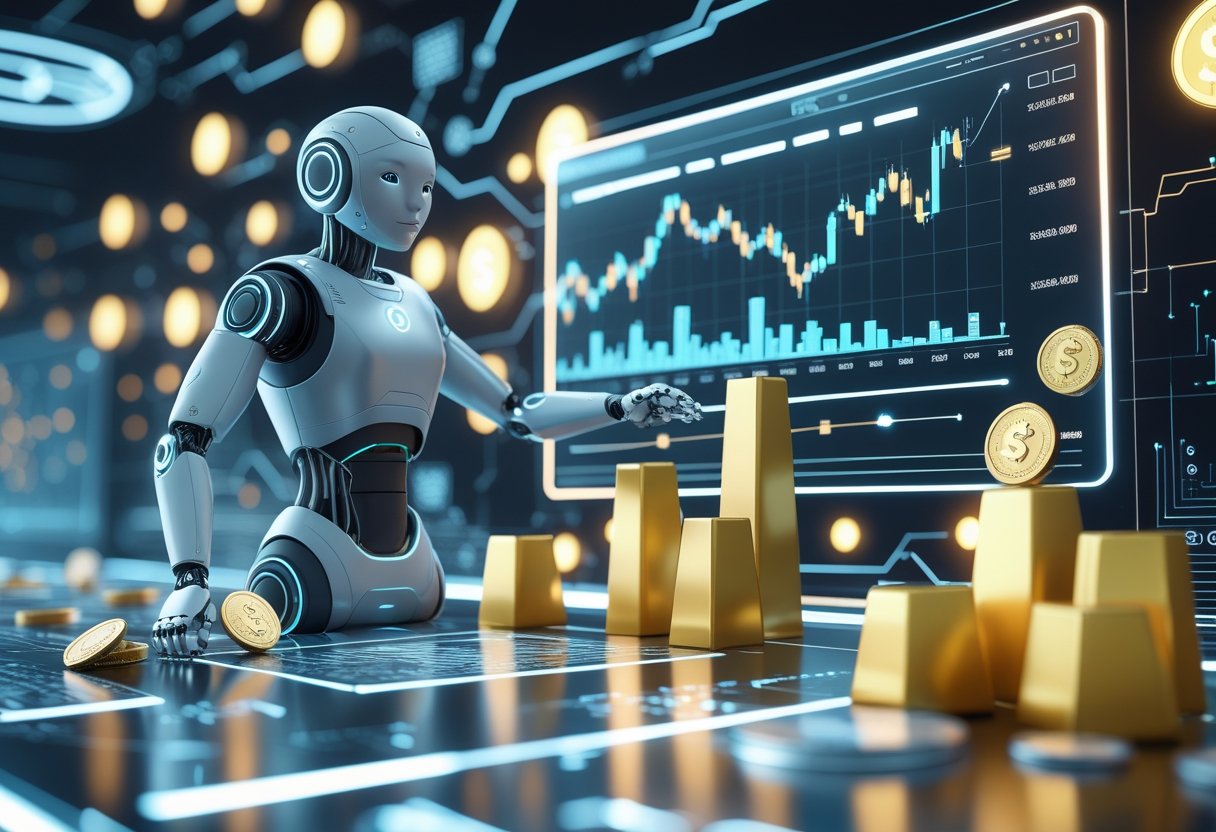
Silver’s superior electrical properties make it vital for manufacturing sensors and conductive paths in AI devices, while gold’s reliability in microelectronics ensures its continued use in high-precision AI systems. This dual role highlights a shift where demand is influenced not just by traditional investment factors but also by technology-driven consumption.
Despite potential economic uncertainties, the integration of AI into everyday technology and industrial processes is likely to sustain and potentially boost demand for gold and silver. This evolving dynamic presents new opportunities and considerations for investors and industries alike.
The Fundamentals of AI Integration in Precious Metals

AI influences both the production and market dynamics of gold and silver. Its integration spans from material use in technology to enhanced industry operations and market analysis, driving shifts in demand and trading behaviors.
Overview of AI Technologies Impacting Gold and Silver
AI hardware relies heavily on precious metals, especially gold and silver, due to their superior conductivity and corrosion resistance. Gold is essential in processors, memory chips, and neural networks, where reliability is critical.
Silver, with its high conductivity and growing industrial demand, is increasingly vital for AI components. This rising need correlates with AI’s expansion in data centers and high-performance computing devices.
The physical presence of these metals underpins AI technologies, linking metal consumption directly to AI growth. This relationship impacts resource extraction and recycling strategies focused on sustaining this demand.
Current Industry Adoption of Artificial Intelligence
The precious metals sector uses AI to enhance mining efficiency and resource management. AI-driven automation and predictive maintenance reduce downtime and operating costs at extraction sites.
Refining and processing benefit from AI-based quality control systems, boosting output consistency. These applications improve profit margins amid fluctuating metal prices.
Many companies also apply AI for supply chain optimization. This integration improves tracking, forecasting, and responsiveness to market changes, reducing inventory risks.
Role of Data Analytics in Metal Markets
AI-powered data analytics improve market transparency by processing vast datasets on supply, demand, and macroeconomic factors. This allows traders to make informed decisions about gold and silver investments.
Algorithmic trading, risk assessment models, and price forecasting increasingly rely on AI. These tools help manage volatility and capitalize on short-term trends.
Investor strategies are evolving to incorporate AI insights, blending traditional analysis with machine learning models. This integration helps identify entry and exit points more precisely in precious metals markets.
AI and Price Forecasting for Gold and Silver
AI is transforming how markets analyze precious metals prices by improving modeling, refining supply and demand insights, and enhancing volatility assessment. These changes provide clearer signals for investors and stakeholders on future trends.
Advancements in Predictive Modeling
AI uses machine learning algorithms to process large datasets, including historical prices, macroeconomic indicators, and geopolitical events. This enables more precise forecasting of gold and silver prices compared to traditional methods.
Models can adapt to new information rapidly, improving accuracy over time. Some AI-driven forecasts suggest notable price movements in the near term, factoring in market sentiment and external shocks. Investors benefit from AI’s ability to uncover complex patterns invisible to human analysts.
Impact on Supply and Demand Analysis
AI integrates data from mining outputs, industrial usage, and technological demand—especially from sectors reliant on AI and electronics. This holistic view highlights growing silver demand due to its role in solar panels, EVs, and AI hardware.
By correlating production rates with consumption trends, AI tools identify potential supply constraints or surpluses early. This dynamic supply-demand mapping helps forecast price shifts with greater confidence. Both metals see enhanced demand forecasts linked to expanding technology-driven uses.
Volatility and Risk Assessment
AI models quantify risks by simulating price fluctuations under various economic or geopolitical scenarios. This fine-tuned analysis allows for anticipation of sharp price swings, especially for silver, which historically shows more volatility than gold.
Risk assessments powered by AI help investors hedge more effectively. They also provide probability estimates for rare but impactful market downturns. As a result, market participants can better weigh short-term risks against long-term prospects using AI-driven insights.
Influence of AI on Gold and Silver Trading
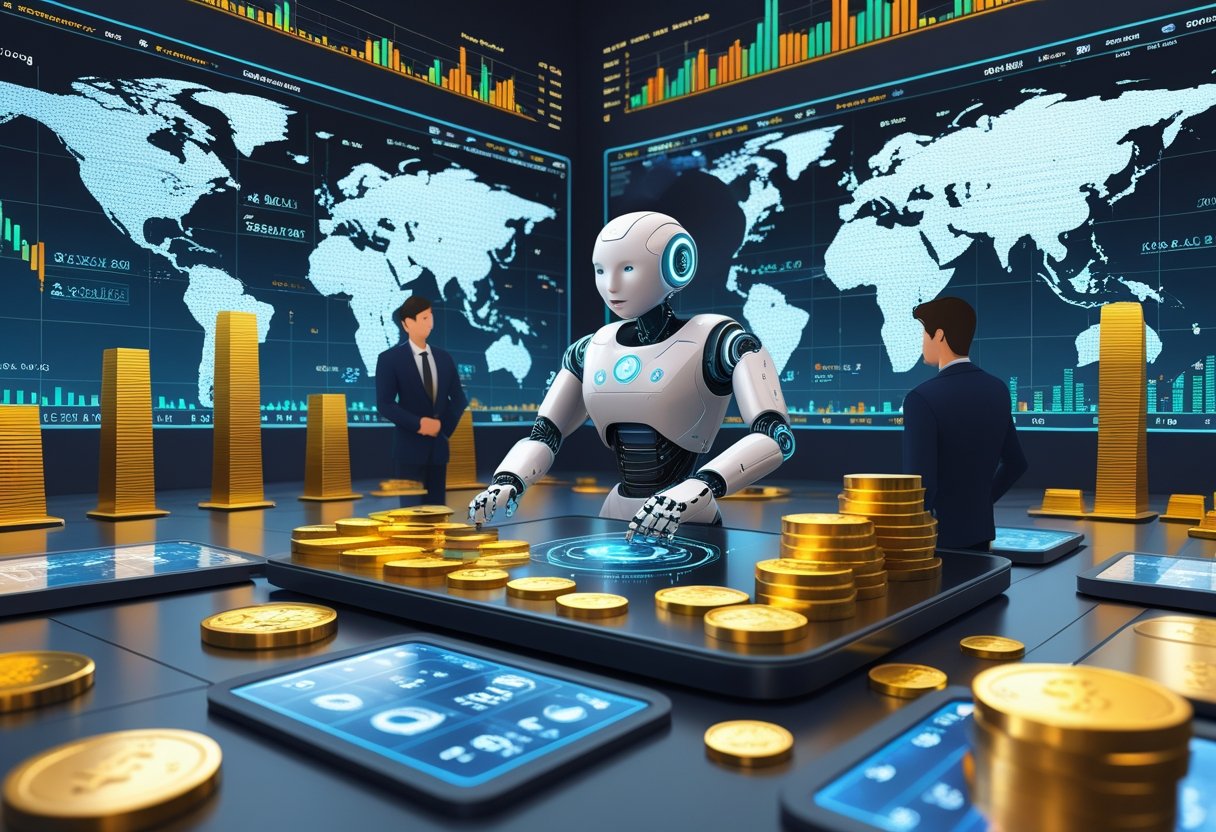
AI is transforming how gold and silver markets operate by speeding up decision-making and improving market insight. It affects both the strategies traders use and the ways real-time data is monitored.
Algorithmic Trading Strategies
AI-driven algorithms execute trades based on complex models that analyze multiple market signals instantly. These strategies can detect price patterns and adjust positions faster than any human trader.
They incorporate data such as central bank announcements, social media sentiment, and technical indicators to predict short-term price movements. This results in high-frequency trades and improved liquidity in gold and silver markets.
By continuously learning, AI algorithms refine their predictions over time, reducing risks and optimizing profits. Traders increasingly rely on these systems to maintain competitive edges in volatile precious metals markets.
Automated Market Monitoring
AI systems now scan vast amounts of information from news sources, economic reports, and trading platforms. This constant monitoring helps identify emerging trends and potential market disruptions before they fully develop.
Such systems can alert traders to unusual buying or selling activity, counterfeit detection in bullion markets, and shifts in demand driven by industrial use, especially in AI-related technologies.
Automated monitoring enhances transparency and speeds up decision-making processes, allowing market participants to respond promptly to global economic changes affecting gold and silver prices.
AI in Precious Metal Investment Decision-Making
AI tools are transforming how investors approach gold and silver by improving data analysis and customizing strategies. This technology enables precise risk assessment and helps tailor investment choices to individual goals and market conditions.
Portfolio Optimization
AI analyzes vast amounts of historical and real-time market data to identify patterns and price trends in gold and silver. This allows investors to optimize asset allocation by balancing risk and potential returns more effectively.
Algorithms factor in volatility, macroeconomic indicators, and geopolitical events, adjusting portfolios dynamically. This process helps reduce human bias and emotional decision-making.
AI-based models also simulate multiple scenarios, offering investors insights into how different strategies might perform under changing market conditions. This leads to better-informed, data-driven decisions when investing in precious metals.
Personalized Investment Platforms
AI-powered platforms provide tailored investment advice based on an individual’s financial profile, risk appetite, and investment horizon.
These platforms use machine learning to continuously refine recommendations as market conditions and user preferences evolve. Investors can receive customized alerts and portfolio adjustments in real time.
Features often include interactive dashboards, predictive analytics, and automated trading options. This accessibility makes it easier for both novice and experienced investors to navigate the complexities of precious metals markets with personalized support.
Mining Sector Transformation Through AI
Artificial intelligence is reshaping how gold and silver mining operates by refining key processes. It enables more precise resource identification and streamlines operational workflows, significantly impacting productivity and safety.
Optimizing Exploration and Extraction
AI systems analyze vast geological data to pinpoint locations with the highest likelihood of mineral deposits. Machine learning algorithms improve accuracy in ore grade predictions, reducing costly drilling errors and enhancing yield estimates. This allows companies to target resources more efficiently.
Advanced sensors combined with AI model real-time feedback during extraction, optimizing equipment use and minimizing waste. Predictive maintenance powered by AI reduces downtime, ensuring continuous operation. These technologies lower operational costs while increasing the volume and quality of extracted gold and silver.
Enhancing Safety and Efficiency
AI-driven automation reduces human exposure to dangerous environments by managing remote-controlled machinery. It monitors environmental conditions, alerting operators to risks such as gas leaks or unstable grounds faster than traditional methods.
Data analytics improve workforce productivity by aligning tasks with real-time conditions. AI also enhances energy management and resource usage, contributing to greener mining practices. These improvements result in safer, more sustainable operations across gold and silver mining sites.
Fraud Detection and Authentication with AI
AI enhances the precision and speed of identifying fraudulent gold and silver products. It enables real-time verification and supply chain tracking, which strengthens trust and reduces losses from counterfeit items. The technology also supports detailed audit trails and rapid anomaly detection.
Combatting Counterfeit Gold and Silver
AI systems use advanced image recognition and machine learning to detect counterfeit precious metals. By analyzing microscopic surface patterns, markings, and composition data, these systems can differentiate authentic gold and silver from fakes with high accuracy.
Specialized algorithms compare digital fingerprints of metals against verified databases. This stops fake bars, coins, and certificates from entering the market.
Machine learning models continually adapt to new counterfeiting techniques, maintaining effectiveness as fraud methods evolve. This reduces false positives and speeds up authentication processes at points of sale or export.
Improving Traceability in the Supply Chain
AI-driven tools track gold and silver from mine to market using blockchain and IoT sensors. This creates a secure, immutable ledger that verifies origin and ownership histories.
Real-time data analytics identify irregularities such as unexpected rerouting, volume inconsistencies, or sourcing from unauthorized locations.
Automated flagging of suspicious events improves compliance with regulations and ethical sourcing standards. It also helps investors and consumers verify that metals come from responsible suppliers.
The combination of AI and digital records reduces human error in documentation and increases transparency across global supply chains.
Environmental Impacts of AI in Gold and Silver
The growth of AI increases demand for gold and silver, metals essential to electronics. This demand intensifies mining activities, which have environmental consequences. However, AI also enables strategies that can reduce these impacts through better resource management and technological innovation.
Sustainable Mining Practices
Mining gold and silver for AI technologies can lead to habitat destruction, water pollution, and high energy use. Sustainable mining aims to minimize these effects by adopting stricter environmental controls.
Companies are increasingly using AI-driven monitoring systems to optimize resource extraction and reduce waste. For example, AI can predict ore quality more accurately, allowing miners to focus only on high-grade deposits. This reduces unnecessary digging and associated environmental disturbances.
Additionally, recycling precious metals from electronic waste is gaining traction. AI aids in sorting and recovering gold and silver, lowering the need for new mining. Such practices reduce emissions, water usage, and soil contamination linked to traditional mining.
Reduction of Environmental Footprint
AI’s role extends beyond mining into the manufacturing and lifecycle phases of precious metals in electronics. AI optimizes supply chains, improving energy efficiency in production and transportation.
Data analytics help companies monitor emissions and resource consumption in real time. This allows for targeted initiatives to reduce environmental footprints through energy savings and waste reduction.
However, the disposal of AI hardware poses challenges. Electronic waste contains hazardous substances and metals that can leach into ecosystems if not properly managed. AI-based recycling technologies are improving the recovery rate of precious metals, helping to close the loop and reduce landfill impacts.
| Impact Area | AI Contribution | Environmental Benefit |
|---|---|---|
| Mining efficiency | Predictive analytics for ore quality | Less waste, reduced habitat damage |
| Resource recovery | AI sorting of e-waste | Lower new extraction needs |
| Manufacturing | Energy consumption monitoring | Reduced greenhouse gas emissions |
| Waste management | Enhanced recycling processes | Decreased soil and water contamination |
Challenges and Limitations of AI in the Precious Metals Industry
AI adoption in gold and silver mining and processing faces several hurdles. These include managing sensitive data risks and overcoming the inherent complexity of deploying advanced technologies in often remote, resource-intensive environments.
Data Privacy and Security Concerns
The precious metals sector deals with valuable and sensitive data related to operations, trade, and proprietary technologies. AI systems require large datasets, raising concerns over unauthorized access or data leaks. Mining companies and technology providers must implement strict cybersecurity measures to protect intellectual property and operational secrets.
Additionally, AI integration may involve third-party vendors and cloud platforms, creating multiple points of vulnerability. Regulatory compliance surrounding data privacy varies by region, forcing companies to navigate complex legal frameworks while safeguarding their data assets. Failure to secure data could result in financial losses or reputational damage, impacting investor confidence.
Technological Barriers
Mining operations, especially for gold and silver, generally occur in harsh and isolated locations. Deploying AI solutions faces challenges such as limited connectivity, power supply constraints, and rugged equipment environments. These factors complicate real-time data collection and AI processing.
Moreover, integrating AI with legacy mining systems and machinery requires significant customization and investment. Skilled personnel capable of operating and maintaining AI tools remain limited within the industry, hindering smooth technology adoption. Finally, the high energy consumption characteristic of mining and AI computation adds pressure to improve efficiency while reducing environmental impact.
The Future Outlook for AI, Gold, and Silver
AI is expected to significantly increase industrial demand for both gold and silver. These metals are essential components in the production of advanced electronic devices and AI hardware.
By 2030, silver’s role in AI-related industries could expand substantially, driven by its superior conductivity and affordability compared to other metals. Gold remains critical for reliable, corrosion-resistant connections in high-performance electronics.
The price forecasts for 2025 suggest a potential rise in the value of both metals, supported by growing AI applications. Investors and industries anticipate increased usage in sectors like data centers, robotics, and renewable energy technologies.
| Aspect | Impact on Gold | Impact on Silver |
|---|---|---|
| Industrial Demand | Moderate to High | High |
| Price Outlook (2025) | Predicted Increase | Predicted Strong Increase |
| Use in AI Hardware | Connector & Sensor Material | Conductive Components |
| Investment Interest | Stable, with Growth Potential | Growing, with Volatility |
AI also improves market analysis and automated trading in precious metal markets. Its ability to enhance risk management may lead to more efficient pricing and investment strategies.
In sum, AI will shape both the demand dynamics and trading landscape of gold and silver in the years ahead.