You want to know fast whether a gold coin is genuine so you don’t overpay or risk a fake piece. Start by checking weight, dimensions, sound, and markings—these simple checks catch most counterfeits before you need specialist tools. If a coin matches its published weight and dimensions, shows the correct mint marks, and passes non‑magnetic, ping, and density checks, it is very likely authentic.

This guide walks you through physical characteristics, how to verify specifications, easy non‑destructive tests you can do at home, and when to use advanced lab analysis or a professional appraisal. Follow the steps here to spot common red flags, protect your investment, and handle coins so they retain value.
Physical Characteristics of Authentic Gold Coins
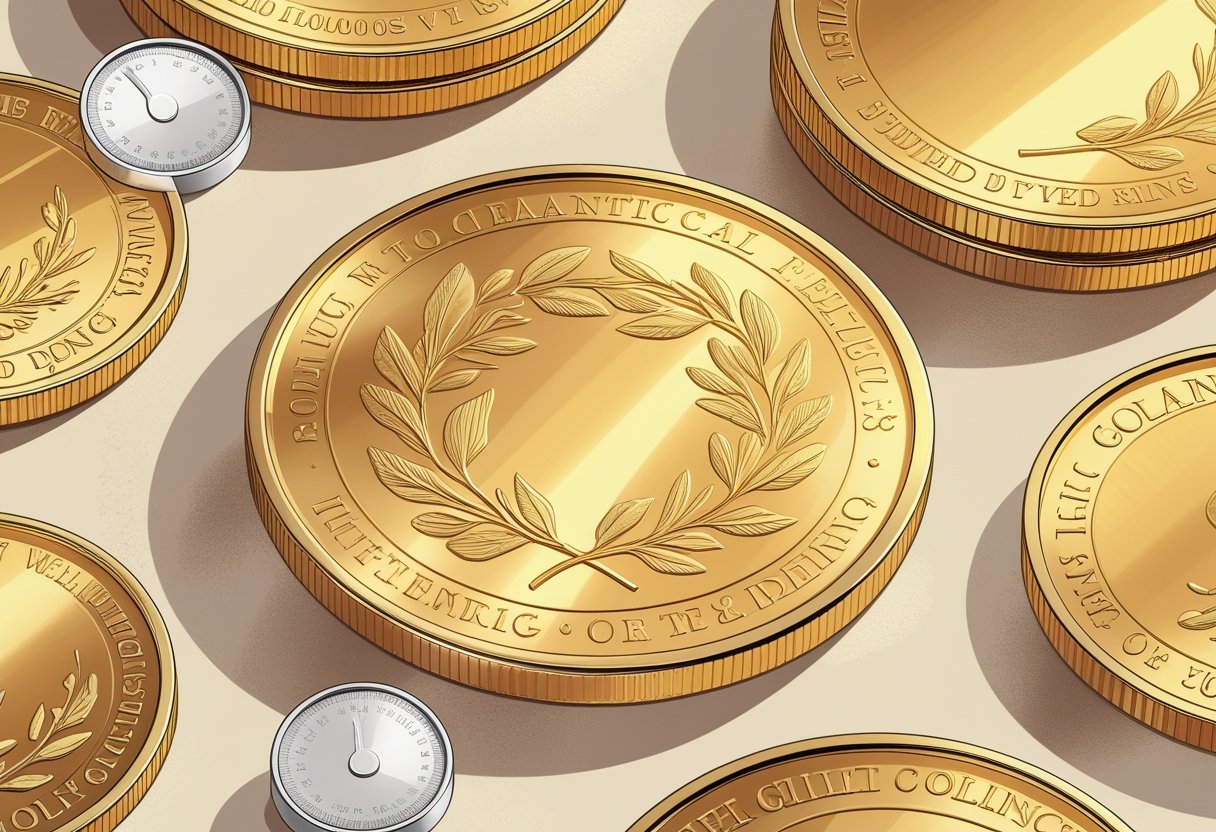
Authentic gold coins show consistent design detail, precise edge work, and a warm, even color that resists tarnish. Inspect these three attributes closely to spot common signs of counterfeit manufacturing.
Visual Inspection
Look for crisp, well-defined design elements: lettering, dates, and relief should show sharp edges without soft or fuzzy details. High-value issues, like sovereigns or American Gold Eagles, use dies that produce fine lines and high relief; uneven depth or blurred features often indicate casting or poor striking.
Check for consistent mint marks and font style compared with verified examples. Small mistakes—wrong fonts, misplaced letters, or mismatched portrait profiles—are frequent in fakes. Also examine the coin’s surface for bubbles, seam lines, or pitting; those are signs of casting rather than proper mint striking.
Use a loupe (10–20x) to inspect micro-details: hairlines, beading around the rim, and the texture inside fields. Genuine coins show uniform die wear patterns; inconsistent tool marks or raised sprue marks suggest aftermarket alteration.
Edge and Rim Details
Examine the rim thickness and edge types: reeded (grooved), plain, or lettered edges must match the coin’s issue and year. Count reeds on reeded-edge coins; a single missing reed or uneven spacing points to trimming or recasting.
Look for clean, sharp junctions where the rim meets the face. A genuine coin has a distinct, even collar where the die struck metal flows uniformly. Irregular, wavy rims, or flattened edges often result from improper casting or resizing.
For lettered edges, verify letter style, spacing, and alignment against authenticated examples. Edge inscriptions that look stamped later, with inconsistent depth or tool marks, usually indicate tampering. Also check for solder seams or added cores on thick or hollow-feeling pieces.
Color and Luster
Gold’s color ranges from pale yellow (high-purity gold) to deeper yellow (alloyed gold); know the expected hue for the coin’s alloy and year. Authentic gold resists oxidation—look for a consistent, warm tone across the entire surface. Dark spots of corrosion or greenish tint suggest base metals underneath plating.
Assess luster under direct light: struck coins show a soft, satiny sheen with radial or cartwheel luster on proof and bullion types. Fake coins often display dull, glassy, or overly bright finishes from plating or chemical treatments. Scratches that reveal a different metal beneath the surface are a clear warning.
If color seems off, perform a density or specific-gravity check before assuming counterfeit. Plating can match color but not weight; a small displacement test or sensitive scale will confirm whether the visual appearance aligns with physical mass.
Checking Coin Specifications

You should verify a coin’s exact weight and dimensions against the official specs for that issue. Small deviations can indicate plating, alloys, or counterfeit casting.
Weight Measurement
Use a digital scale that reads at least 0.01 grams for bullion and graded coins. Tare the scale, place the coin in the center, and record the weight to two decimal places. Compare your reading to the issuer’s published mass (for example, a 1 oz American Gold Eagle should weigh 33.931 grams). Allow for tiny manufacturing tolerances—typically ±0.05 g for modern bullion—but treat differences larger than tolerance as suspicious.
If you suspect an error, repeat the measurement three times and average the results. For high-value coins, have a reputable dealer or assayer confirm the mass with calibrated equipment before transacting.
Dimensions Consistency
Measure diameter and thickness with a caliper that reads to 0.01 mm. Record diameter across the rim and thickness at the coin’s center and edge profile. Compare to the mint’s stated diameter and thickness (for example, Proof and bullion variants often differ by fractions of a millimeter). Consistent mismatch in either dimension suggests altered plating, core replacement, or cast reproduction.
Also inspect reeded edges and lettering spacing while you measure. Edge detail should match official images and specification sheets; irregular reeding, blurred lettering, or seams along the rim often accompany dimensional inconsistencies.
Non-Destructive Gold Tests
You can screen coins quickly without harming them by using simple tools and close observation. These methods flag obvious fakes and help decide if you need professional testing.
Magnet Test
Gold is not magnetic. Use a small neodymium magnet or a refrigerator magnet placed near the coin; if the coin is strongly attracted, it contains ferromagnetic metals and is not pure gold.
Weak or no attraction does not prove authenticity. Many counterfeits use non-ferrous metals (brass, copper, tungsten) that won’t stick either. Check for partial attraction at the edge or rim—some plated coins have magnetic cores exposed where plating is worn.
Practical tips:
- Hold the magnet close but not touching; note any pull.
- Test known-gold and known-fake reference pieces to compare force.
- Combine this test with weight and visual checks; magnet alone rarely provides a definitive result.
Sound and Bounce Test
Gold has a distinct sound and density. When struck gently with another coin or tapped on a hard surface, real gold produces a long, low “ping” and little bounce because of its high density.
Perform the sound test by holding the coin on your fingertip and tapping it with a non-magnetic metal coin or a small metal rod. Listen for a clear, sustained tone rather than a short, dull thud. For the bounce test, drop the coin from a small height (about 1–2 inches) onto a hard, level surface and observe rebound; genuine gold will rebound very little.
Limitations and safety:
- Surface damage, dirt, or plating can change sound.
- Practice with verified gold coins to learn expected tones.
- Use these tests with other checks—sound and bounce are suggestive, not conclusive.
Advanced Testing Methods
These methods provide more precise verification than simple at-home checks. They require specific tools or a trained operator and deliver measurable results you can document.
Acid Test
The acid test uses nitric or aqua regia solutions to check surface reactivity and approximate karat. Scratch the coin lightly on a testing stone to leave a small streak, then apply the appropriate acid for the expected karat (e.g., 10K, 14K, 18K). Observe the streak: no change usually indicates the claimed fineness; dissolution or color change indicates lower purity or plating.
Take precautions: acids are corrosive and produce harmful fumes. Work in a ventilated area, wear gloves and eye protection, and neutralize spills with baking soda. Avoid testing collectible coins with value beyond melt price—scratching damages numismatic value.
The acid test can mislead on plated items since surface gold can resist acid even when the core is base metal. Use this test as a quick, low-cost check, but confirm suspicious results with density measures or professional assays.
Electronic Gold Testers
Electronic testers measure electrical conductivity or resistance to estimate gold purity without removing metal. You place the probe on a clean area of the coin and the device compares readings to internal calibration for different karats. Many handheld units give near-instant karat-readouts and store multiple alloy profiles.
These testers are nondestructive and faster than acids, making them suitable for coins you want to keep pristine. However, they require a flat contact area and can be fooled by surface plating or unusual alloys. Calibration and probe maintenance affect accuracy, so verify with a control sample of known purity.
For high-value coins use a lab-grade XRF spectrometer instead of basic handheld testers. XRF yields elemental composition by percent without contact damage, but it costs more and often requires a service provider.
Authentication of Markings and Mint Stamps
Check the coin’s stamped information carefully and compare it to known standards for that issue. Focus on the presence, placement, and clarity of purity marks, designer initials, and mint stamps; these details often betray counterfeits.
Examining Hallmarks
Hallmarks indicate metal purity and sometimes assay offices. Look for numeric purity marks like “999”, “917” (22K), or fractional marks such as “24K”; they should be crisp and correctly placed for the coin type. Blurry, uneven, or misaligned purity stamps suggest tampering or plating.
Also inspect small symbols and initials—designer initials and assay symbols are often tiny but consistent on authentic pieces. Use a loupe (10x) to verify stroke sharpness and compare to high-resolution images from the issuing mint. Check edge treatment near hallmarks; filed or re-engraved edges are red flags.
If the hallmark font, spacing, or punctuation differs from official examples, mark the coin for further testing. Keep a reference image or catalogue entry on hand for direct comparison.
Identifying Mint Marks
Mint marks identify the facility that struck the coin and follow strict placement rules. Know where the mint mark should appear for your specific coin—on some issues it’s on the obverse near the date, on others the reverse field or rim. A mint mark in the wrong location usually signals a fake.
Examine the mint mark’s size, depth, and orientation. Authentic marks match the strike style of the coin: weak but consistent on worn originals, sharply struck on modern bullion. Look for double strikes, added punches, or mismatched font styles; these indicate alteration.
Use magnified comparison against official mint examples or a trusted database. If the mint mark looks suspicious but other features match, request professional authentication or XRF/density testing before accepting provenance-based value.
Professional Appraisal and Certification
When you need definitive authentication, seek a professional appraiser or an accredited grading service. These experts use precise instruments—XRF analyzers, microscopes, and scales—and detailed reference databases to confirm composition, weight, and die characteristics.
Submit coins to reputable services such as PCGS or NGC when you want third-party certification. A graded coin gets a sealed holder with a grade and a serial number, which increases market trust and makes resale easier.
Expect different service levels and fees; turnaround time varies from days to months. Ask about authentication, grading, conservation (slabbing), and insurance value reports before you send coins in.
Bring provenance and purchase records when you consult an appraiser; documentation speeds verification and supports value estimates. If shipping coins, follow the grader’s packing and insurance instructions to reduce risk.
Consider cost versus value: appraisal and certification fees can be worthwhile for high-value coins but may exceed the coin’s market premium for low-value items. Use certified results to back up claims in sale listings or to resolve disputes with buyers or dealers.
Common certification deliverables:
- Authentication statement (confirms genuineness)
- Grade and serial number (if slabbed)
- Metal composition and weight (instrument-backed)
- Condition notes (marks, wear, alterations)
Choose firms with clear track records and verifiable contact information to protect your coins and ensure reliable results.
Common Signs of Counterfeit Gold Coins
You can often spot fakes by checking weight and dimensions first. Genuine coins match published weight and diameter within tight tolerances; a scale and caliper reveal obvious mismatches quickly.
Surface details frequently give giveaways. Look for soft or blurred relief, uneven fields, or missing mintmarks—fine design elements on real coins are crisp and consistent.
Magnetism, color, and tone offer quick clues. Gold is non-magnetic and has a distinct warm color; if a coin is attracted to a magnet or shows odd discoloration, treat it with suspicion.
Sound and ring tests help when you lack lab tools. A real gold coin produces a clear, sustained ring when struck gently; a dull thud suggests base-metal cores or plating.
Edges and seams tell a lot about construction. Check for visible seams, odd reeding, or inconsistent edge lettering—these often indicate plated cores or assembled counterfeits rather than solid strikes.
Wear patterns should match high points, not random patches. Natural circulation wear appears on raised details; uniform wear or pristine high points alongside worn fields can signal tampering.
Documentation and provenance matter. Lack of packaging, certificates, or receipts from reputable dealers raises risk; serial numbers and third-party grading add credibility.
Use a quick checklist to stay systematic:
- Weight and dimensions correct?
- Sharp design details?
- Non-magnetic and proper color?
- Consistent wear and clean edges?
- Supporting paperwork or grading?
Storing and Handling Gold Coins to Prevent Damage
Handle coins by the edges to avoid fingerprints, oils, and acid from your skin. Wear cotton or nitrile gloves when possible to keep surfaces pristine and reduce cleaning needs.
Place coins on a soft, clean surface like a towel or cloth when inspecting them. Avoid hard countertops or metal surfaces that can cause nicks or scratches if a coin slips.
Store coins in individual holders — capsules, flips, or acid-free envelopes — to prevent contact and abrasion. Label holders with non-acidic tags to keep records without attaching anything directly to the coin.
Keep coins in a stable, dry environment away from direct sunlight. Aim for room temperature and low humidity; consider silica gel packs in storage boxes to reduce moisture.
For high-value pieces, use a safe or bank deposit box for theft and environmental protection. If you store at home, bolt safes to the floor and choose a location that avoids basement dampness and attic heat.
Do not polish or clean coins unless advised by a professional; cleaning often reduces collector value. If a coin requires cleaning for identification, consult a numismatic expert first.
Use a simple inventory table to track your collection and storage location:
| Coin | Year/Type | Holder | Location |
|---|---|---|---|
| Example | 1908 Saint-Gaudens | Capsule | Home safe |
Inspect stored coins periodically for signs of corrosion or damage, and update your records after any movement or appraisal.