Silver remains significantly undervalued compared to its historical relationship with gold and its fundamental supply and demand factors. Despite growing industrial use and tightening supply, the price of silver has lagged behind gold, creating a notable gap that many experts highlight as an opportunity for investors.
This undervaluation is influenced by market manipulation, shifting demand, and a high gold-to-silver ratio, all pointing to potential price correction in the near future.

The contrast between silver’s price and its intrinsic value is supported by the dual role silver plays as both an industrial metal and a store of value. Increasing mainstream interest, combined with tightening supply conditions, suggests the current market price does not fully reflect silver’s true worth. This dynamic makes it one of the more compelling assets to watch in 2025.
Understanding Silver Valuation
Silver’s price is influenced by various factors, including market demand, industrial use, and economic conditions. Its value history reveals distinct trends compared to other
precious metals, especially gold. Understanding these dynamics can clarify why silver’s market price may not fully reflect its intrinsic potential.
What Determines Silver Prices
Silver prices are determined by supply and demand fundamentals intensified by investor behavior and economic shifts. Industrial demand plays a significant role since silver is used extensively in electronics, solar panels, and medical devices.
Investment demand fluctuates with
economic uncertainty, often driving
silver prices upward as it serves as a safe-haven asset. Global mining output and recycling influence supply levels, while government policies and market speculation also impact price movements.
The
gold-to-silver ratio is a critical metric showing how many ounces of silver are equivalent to one ounce of gold. A high ratio suggests silver is undervalued relative to gold and may signal potential price increases.
Key Historical Trends for Silver
Historically, silver prices have been more volatile than gold due to smaller market size and heavier industrial reliance. Major spikes often aligned with
economic crises or spikes in industrial demand.
Silver prices peaked sharply in 1980 and again during the 2010s, following financial turmoil and rising inflation fears. However, silver has experienced prolonged periods of underperformance between peaks, especially when gold prices outpaced it.
The asset has also exhibited cyclical behavior affected by mining discoveries and technological changes. Understanding these trends helps forecast potential shifts based on current economic and industrial conditions.
Silver Versus Other Precious Metals
Compared to gold, silver is cheaper per ounce and more accessible for small investors, but it carries higher price volatility. Unlike gold, silver’s value is tied more closely to its industrial uses, which account for about 50% of total demand.
Platinum and palladium, other precious metals, have narrower markets with more specialized industrial applications, making silver unique in balancing investment appeal and industrial necessity.
The long-term gold-to-silver ratio historically averages near 55, but ratios above 88 indicate silver may be undervalued. This wide fluctuation underscores differences in supply-demand dynamics between these metals.
Arguments Suggesting Silver Is Undervalued
Silver’s valuation is influenced by factors such as market supply constraints, its role as a
hedge against inflation, and expanding industrial uses. These specific elements paint a clearer picture of why silver currently trades below its potential value relative to other assets.
Supply and Demand Dynamics
Silver faces notable supply limitations that tighten its availability. Mining production has struggled to keep pace with growing demand, contributing to tighter physical supply in the market.
At the same time, demand from investors and industrial users continues to rise. This sustained demand without a matching increase in supply creates upward pressure on prices.
The gold-to-silver ratio remains historically high. This metric suggests silver is undervalued compared to gold, as silver’s market price is low relative to gold despite similar economic roles. This imbalance signals a potential price correction if ratio norms return.
Inflation and Currency Devaluation
Silver is considered a
store of value during inflationary periods. When fiat currencies lose purchasing power, silver offers protection due to its intrinsic worth.
Investors often turn to silver to hedge against currency devaluation. Its physical nature and limited supply increase its appeal when inflation erodes confidence in paper money.
Silver has shown a strong correlation with inflation rates historically. Rising inflation often leads to increased buying interest, which can drive silver prices up in real terms.
Industrial and Technological Uses
Beyond investment, silver has extensive
industrial applications, particularly in electronics, solar panels, and medical devices. Its excellent conductivity and antimicrobial properties make it critical to modern technology.
Demand from these sectors steadily increases as technology adoption expands worldwide. This trend supports silver’s long-term value beyond traditional investment uses.
Industrial consumption accounts for a significant portion of total silver demand. Fluctuations in this sector directly impact silver prices, underlining the metal’s dual role as both an industrial commodity and
investment asset.
Key industrial uses include:
| Sector |
Application |
Importance |
| Electronics |
Circuit boards, connectors |
High conductivity requirements |
| Solar Energy |
Photovoltaic cells |
Renewable energy growth |
| Medicine |
Antimicrobial coatings |
Infection control |
Counterarguments: Is Silver Fairly Valued?
Several factors challenge the idea that silver is undervalued. These include the influence of global economic conditions and how
market sentiment shapes silver’s price dynamics. Both elements provide a different perspective on silver’s current valuation.
Global Economic Factors
Silver’s price is affected by
international interest rates, inflation, and
currency strength. For example, rising interest rates often make non-yielding assets like silver less attractive. A stronger U.S. dollar can also reduce silver’s price for holders of other currencies.
Industrial demand plays a crucial role as well. Silver’s use in electronics, solar panels, and medical applications ties its value closely to economic growth and technological trends. If these sectors slow down, silver’s price may reflect that reality rather than being undervalued.
Government policies and
geopolitical tensions further influence supply chains and investor confidence. Thus, the interplay of these variables can justify current silver prices as fair rather than suppressed.
Market Sentiment and Speculation
Investor behavior has a significant impact on silver pricing. Speculative trading and shifts in market sentiment can cause volatility that distorts perceived value. Some argue that silver’s price reflects a balance of optimistic and pessimistic views rather than manipulation.
The historically high gold-silver ratio, sometimes cited as evidence of undervaluation, could also represent a market adjustment to risk and liquidity preferences. Traders might favor gold for its stability during uncertain times, impacting silver’s demand.
In addition, the futures market and hedge funds influence short-term pricing. Their activity can drive price swings that obscure longer-term value, making it appear undervalued when it is actually aligned with present market expectations.
Impact of Government and Central Bank Policies
Government actions and central bank decisions can directly affect
silver’s supply, demand, and market price. These policies shape the economic environment, influencing investor behavior and the metal’s role as an inflation hedge.
Monetary Policy Influences
Central banks influence silver markets mainly through interest rate changes and currency valuation policies. When interest rates rise, the opportunity cost of holding non-yielding assets like silver increases, which often causes silver prices to fall.
Conversely, low or negative interest rates encourage investment in precious metals as safe assets. Quantitative easing and currency devaluation also affect silver by increasing inflation expectations and weakening local currencies, making silver more attractive as a store of value.
Key factors include:
- Interest rate adjustments affecting credit availability
- Currency devaluation boosting local demand for silver
- Inflationary signals increasing silver’s appeal as a hedge
Geopolitical Events
Geopolitical instability can create uncertainty in financial markets, prompting investors to seek safe-haven assets such as silver. Conflicts, trade tensions, and sanctions can disrupt supply chains or increase industrial demand, impacting silver prices.
Government-imposed tariffs or export restrictions on silver-producing countries also influence global supply. Additionally, geopolitical risks can amplify inflation fears, further driving silver demand.
Important geopolitical impacts on silver:
- Increase in safe-haven buying during crises
- Supply disruptions from affected mining regions
- Trade policies affecting silver exports and imports
Investment Strategies If Silver Is Undervalued
Investors considering silver must evaluate how to gain exposure effectively. This involves choosing between direct ownership or indirect investment. Additionally, integrating silver into a portfolio requires careful attention to balance and risk.
Physical Silver Versus ETFs
Physical silver offers tangible ownership, including coins and bars. It provides a hedge against currency risks and market volatility, but storing and insuring
physical silver can add costs and complexities.
Exchange-traded funds (ETFs) provide exposure without the need for physical storage. They offer liquidity and ease of trading but carry management fees and rely on the fund’s credibility. ETFs may not fully reflect changes in spot silver prices due to tracking differences.
Investors seeking security and personal control may prefer physical silver. Those prioritizing convenience and quick market access might choose ETFs. Each option carries distinct pros and cons that affect risk and return profiles.
Portfolio Diversification with Silver
Silver can diversify portfolios by reducing overall risk, especially given its hybrid role as both a monetary and industrial metal. Its supply deficits and rising industrial demand make it a strategic hedge against inflation and economic uncertainty.
Incorporating 5-10% silver exposure is often recommended for balancing commodity and equity risks. The gold-silver ratio near 100:1 signals potential undervaluation, supporting silver’s role in rebalancing asset allocations.
Diversification strategies should consider silver’s price volatility and correlation with other assets. Investors focusing solely on precious metals might overlook its industrial demand dynamics, which influence long-term value.
Recent Developments Affecting Silver’s Value
Silver’s value has been influenced by advancements in technology as well as shifts in demand from emerging economies. Both factors play a critical role in shaping supply and demand dynamics that impact pricing.
Technological Innovations
Advances in renewable energy and electronics have increased silver’s industrial use. Silver’s superior conductivity makes it essential in solar panels, electric vehicles, and 5G technology. Growth in these sectors drives robust demand for silver in manufacturing.
Additionally, innovations in medical technology use silver for antimicrobial applications and diagnostic devices. This diversification of industrial uses supports sustained demand despite broader market fluctuations.
Supply constraints combined with growing technological reliance create upward pressure on silver prices. The metal’s unique properties secure its role in emerging technologies, differentiating it from other precious metals.
Emerging Market Demand
Rising consumption in countries such as India, China, and Southeast Asia significantly impacts silver’s market. Increased income levels and industrial growth in these regions drive higher
silver demand for jewelry, electronics, and investment.
These markets also contribute to increased
silver coin and bar purchases as investors seek to hedge against inflation and currency fluctuations. Silver’s affordability compared to gold makes it attractive for both industrial and retail purchasers.
Continued urbanization and infrastructure projects in emerging markets reinforce the metal’s demand outlook. This persistent growth helps explain silver’s price resilience despite global economic uncertainties.
Long-Term Outlook for Silver Prices
Silver’s long-term price outlook is influenced by several critical factors, including industrial demand, supply constraints, and macroeconomic conditions. Industrial use of silver continues to grow, particularly in electronics, solar energy, and medical applications, which supports price appreciation.
Supply challenges persist due to limited mining growth and geopolitical risks affecting production. This supply-demand imbalance contributes to upward pressure on prices over the coming years.
Analysts project silver prices may experience gradual increases, with some forecasts suggesting potential peaks above current all-time highs by the late 2020s. Estimates vary, but bullish views often highlight targets in the $40-$50 range within the next few years.
A few key drivers can be outlined:
- Rising industrial demand: Expanding technological uses require more silver.
- Limited supply growth: Mining expansion is slow and costly.
- Monetary policy: Inflation concerns and central bank easing may increase appeal as a store of value.
Some analysts even suggest the gold-silver ratio might recalibrate, favoring silver as it moves closer to historical norms. This would imply silver gains relative to gold, enhancing its
investment appeal.
Below is a simple projection table for silver prices based on current consensus estimates:
| Year |
Price Range (USD/oz) |
Notes |
| 2025 |
$35-$45 |
Moderate growth expected |
| 2026 |
$40-$50 |
Potential to break ATH |
| 2027-30 |
$45-$60+ |
Continued industrial demand |
Market risks remain, but the medium to long-term outlook supports a steady positive bias for silver’s valuation.
Conclusion
Silver is currently priced below its historical and industrial value. The gold-to-silver ratio near 80:1, compared to its long-term average of 40-50:1, highlights this gap clearly. This imbalance suggests silver is undervalued relative to gold.
Industrial demand plays a significant role in silver’s value. Growth in solar energy, electronics, and electric vehicles is increasing silver consumption. At the same time, supply constraints limit the availability of new silver.
Market factors such as strategic accumulation by countries like China and India add upward pressure on silver prices. Additionally, ongoing
market dynamics including manipulation and investment trends keep silver prices subdued.
Key reasons for silver’s undervaluation include:
- Elevated gold-to-silver ratio
- Rising industrial needs
- Limited supply
- Geopolitical and market influences
This combination forms a
strong case that silver’s market price does not fully reflect its potential or critical uses. Investors often find silver more accessible than gold, making it an important asset in
diversified portfolios.
Understanding these factors supports the view that silver is positioned for potential price adjustments as market conditions evolve.

 The contrast between silver’s price and its intrinsic value is supported by the dual role silver plays as both an industrial metal and a store of value. Increasing mainstream interest, combined with tightening supply conditions, suggests the current market price does not fully reflect silver’s true worth. This dynamic makes it one of the more compelling assets to watch in 2025.
 Silver’s price is influenced by various factors, including market demand, industrial use, and economic conditions. Its value history reveals distinct trends compared to other precious metals, especially gold. Understanding these dynamics can clarify why silver’s market price may not fully reflect its intrinsic potential.
 Silver’s valuation is influenced by factors such as market supply constraints, its role as a hedge against inflation, and expanding industrial uses. These specific elements paint a clearer picture of why silver currently trades below its potential value relative to other assets.
 Several factors challenge the idea that silver is undervalued. These include the influence of global economic conditions and how market sentiment shapes silver’s price dynamics. Both elements provide a different perspective on silver’s current valuation.
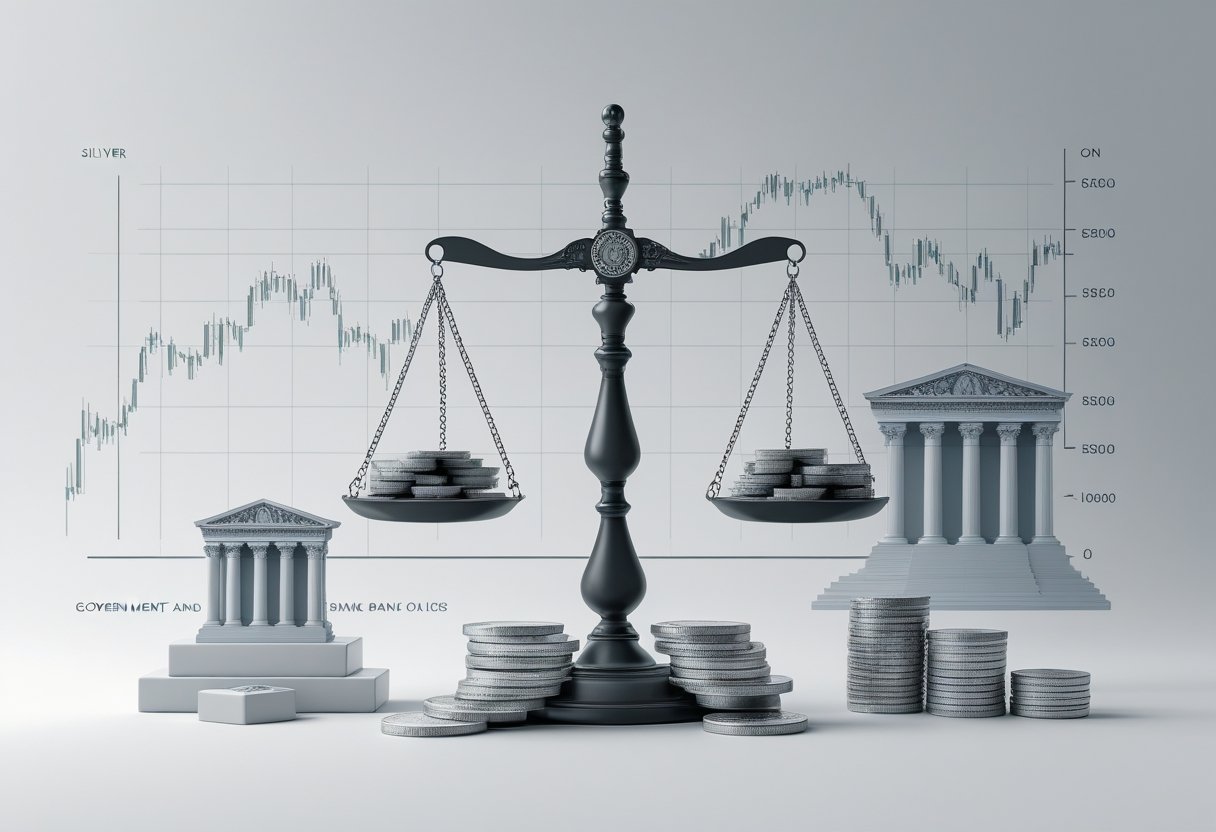 Government actions and central bank decisions can directly affect silver’s supply, demand, and market price. These policies shape the economic environment, influencing investor behavior and the metal’s role as an inflation hedge.