Palladium prices have shown significant fluctuations in recent years due to changes in supply, demand, and market dynamics. Analysts expect the metal to experience some upward pressure in the near future because of tightening mine supply and geopolitical factors affecting availability. The best current outlook suggests that palladium prices will rise moderately through 2026 and beyond, driven by supply constraints and ongoing industrial demand.

Demand for palladium remains strong, particularly from the automotive sector, where it is used in catalytic converters. However, shifts toward electric vehicles and improvements in recycling may temper long-term growth. The market is entering a transition phase, moving from supply deficits to potential surpluses after 2026, but short-term tightness is likely to support price increases.
Investors and industry observers should watch factors like mining output, recycling rates, and trade policies, as these will influence palladium’s price trajectory. Understanding these drivers helps anticipate market movements and the metal’s role within the broader precious metals landscape.
Current State of the Palladium Market

Palladium prices have experienced notable shifts recently, driven by supply constraints and fluctuating demand. Key factors shaping the market include recycling rates, geopolitical risks, and shifts in the automotive sector. Its performance compared to platinum and other precious metals highlights emerging trends that influence investor sentiment and industrial use.
Recent Price Trends
In 2025, palladium prices have risen sharply, reflecting tightening supply and robust demand, especially from the auto industry. Prices have increased by more than 6% within recent weeks, marking one of the strongest upward movements since 2017.
Volatility remains high due to geopolitical tensions and tariff uncertainties, causing rapid price corrections alongside gains. Analysts have raised forecasts for 2026, anticipating continued upward momentum amid persistent supply challenges.
Major Influencing Factors
The primary driver of palladium demand is the automotive sector, accounting for over 80% of total consumption. Supply disruptions, including mining constraints and limited recycling rates, create tight market conditions.
Recycling recovery rates are critical; improvements could ease deficits expected through 2025, with surpluses projected from 2026 onward. Tariffs and sanctions add complexity, making investment in palladium risky but potentially profitable due to scarcity.
Comparison With Other Precious Metals
Palladium is increasingly compared to platinum in terms of market dynamics. While palladium has shown strong gains recently, metals analysts forecast a shift starting in 2026, expecting platinum to outperform palladium.
This divergence is tied to expected palladium surpluses and platinum’s growing industrial and investment demand. Unlike gold, which attracts safe-haven investors, palladium’s liquidity is lower, resulting in higher price volatility.
Key Drivers of Palladium Prices
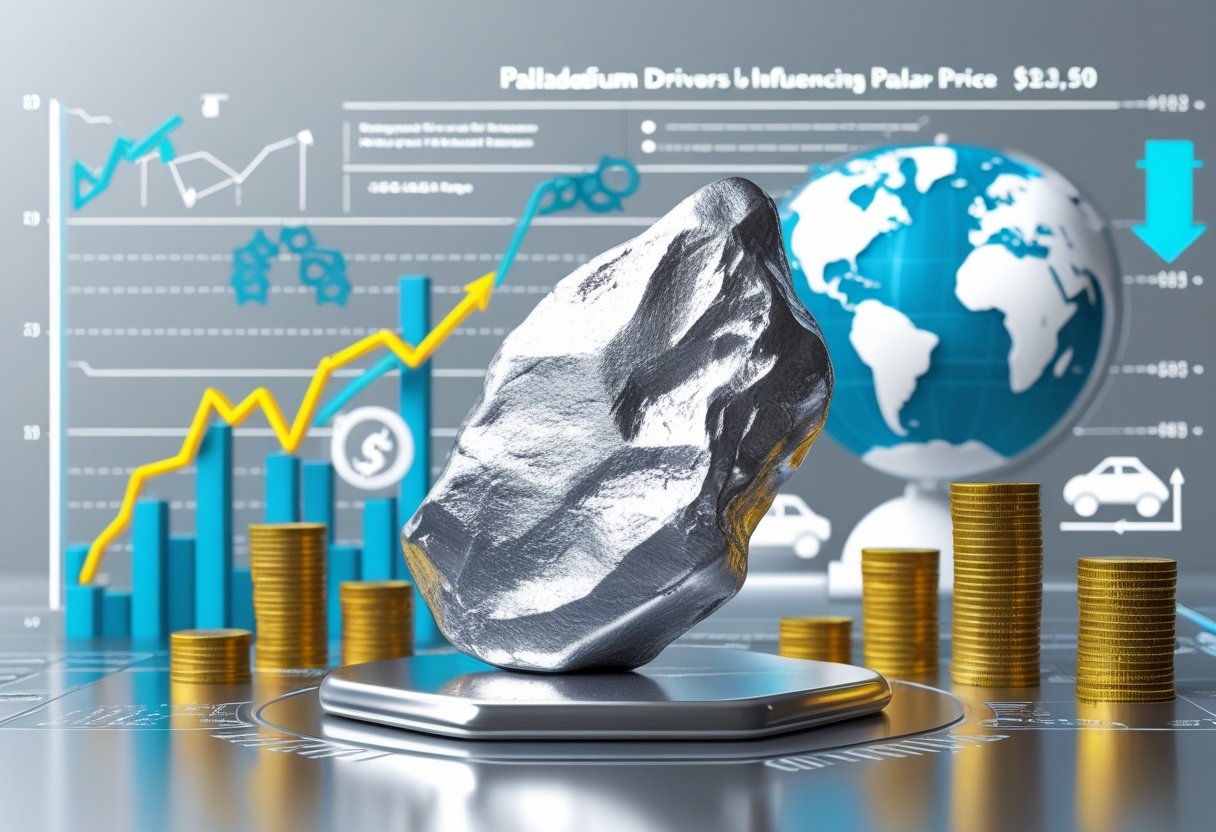
Palladium prices are influenced by specific factors related to its availability, industrial demand, production limits, and emerging uses. Changes in any of these can have a direct impact on its market value and price stability.
Supply and Demand Dynamics
The balance between palladium supply and demand is a primary factor shaping its price. Supply is limited due to the metal’s rarity and concentration in a few key geographic regions. Demand fluctuates with industrial consumption patterns, notably in automotive and electronics sectors.
Recycling has grown as a supplementary source but does not fully compensate for limited mining output. Supply chain disruptions, geopolitical tensions, or mine closures reduce available palladium, pushing prices higher. Conversely, increased production or reduced industrial use can lead to price declines.
Automotive Industry Demand
The automotive sector is the largest consumer of palladium, mainly for catalytic converters in gasoline engines. This use accounts for a significant share of global palladium demand. The pace at which internal combustion engines are replaced by electric vehicles (EVs) directly affects palladium consumption.
Hybrid vehicles still use palladium, but a strong shift toward EVs, which require less or no palladium, reduces demand over time. However, in markets where gasoline vehicles remain dominant, sustained demand supports prices. Regulatory emission standards also influence automotive palladium demand, as stricter limits increase catalytic converter use.
Mining Production Constraints
Palladium mining is concentrated mainly in Russia and South Africa, making the metal subject to geopolitical risks and operational challenges. Limited new mining projects and supply disruptions due to political or environmental issues restrict production growth.
Mining costs and logistical complexities also affect palladium availability. Tariffs, labor disputes, and infrastructure issues can limit output. These constraints heighten price volatility, especially when demand remains steady or increases.
Technological Applications
Beyond automotive use, palladium is essential in electronics, jewelry, and chemical catalysts. Demand from these sectors is smaller but continues to grow with advancements in technology.
Industrial applications requiring high-purity palladium, such as fuel cells and electronics connectors, contribute to overall demand. Innovations that either increase palladium efficiency or find alternatives could influence future price trajectories but currently, technological demand remains an important price driver.
Global Economic and Geopolitical Impacts
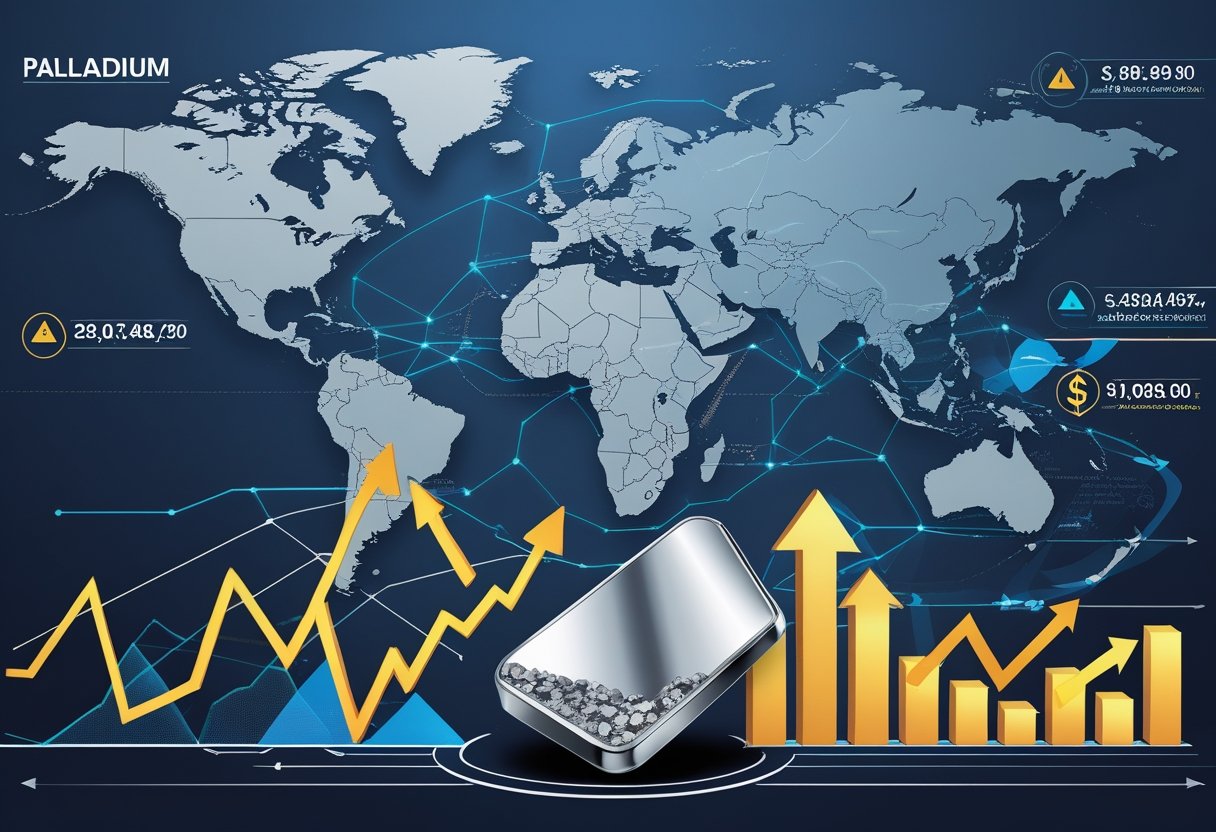
Palladium prices are shaped by economic trends, political conflicts, and currency movements. These factors influence both supply reliability and demand from key industries like automotive manufacturing, which relies heavily on palladium for catalytic converters.
Macroeconomic Indicators
Economic growth directly affects palladium demand, particularly through the automotive sector. When global economies strengthen, vehicle production rises, boosting palladium consumption. Conversely, recessions lead to reduced demand and price pressure.
Inflation rates, interest rates, and industrial output data also impact market sentiment. For example, expectations of lower interest rates can increase investment demand for palladium as a commodity, lifting prices.
Key global economies such as China, the US, and the EU heavily influence palladium demand. Economic recovery phases, especially after crises, tend to push palladium prices upward due to increased industrial activity.
Geopolitical Tensions Affecting Supply
South Africa and Russia are dominant palladium producers, making geopolitical stability in these regions critical. Strikes, power outages, or political conflicts reduce mining output and tighten supply.
Trade policies and tariffs can disrupt supply chains. Recent threats of high tariffs on automotive imports in North America have the potential to reduce palladium demand or raise costs, affecting prices negatively.
Geopolitical tensions also lead to market uncertainty, which can heighten speculator activity and increase price volatility. Monitoring developments in these key countries is essential for understanding supply risks.
Currency Fluctuations
The US dollar’s strength inversely correlates with palladium prices. When the dollar weakens, palladium, priced in USD, becomes cheaper for holders of other currencies, raising demand.
Economic data affecting the dollar, such as producer price indexes, can influence expectations for Federal Reserve policy moves and thus impact palladium’s short-term price trends.
Investors often watch for dollar trends alongside geopolitical news. Sharp currency swings can cause rapid changes in palladium’s market valuation, especially amid tensions or economic uncertainty.
Forecasts and Market Predictions

Palladium’s price trajectory is influenced by supply dynamics, industrial demand, and geopolitical factors. Possible price changes reflect short-term market fluctuations and longer-term structural trends driven by automotive demand and mining output.
Short-Term Outlook
In 2025, palladium prices are expected to remain subdued or moderately decline. Oversupply from increased mine production and slowing demand from the automotive sector, particularly in gasoline vehicle catalysts, are key factors.
Price volatility continues, with palladium fluctuating mostly between $900 and $1,100 per ounce throughout 2024, occasionally peaking near $1,200. This range reflects uncertainty but a general lack of strong bullish momentum.
The short-term outlook suggests that prices could face downward pressure unless unexpected supply disruptions or policy shifts increase demand sharply.
Long-Term Projections
Over the next five to ten years, palladium faces structural headwinds due to the gradual shift toward electric vehicles, which require less palladium for emission controls. This trend is expected to weaken demand longevity.
However, constrained mining supply could limit price drops. Analysts point to potential price stabilization or modest gains beyond 2026 due to tight mine supply, geopolitical risks, and investment rotation from other metals.
Forecasts indicate palladium might hover in a broad $900-$1,300 range through the late 2020s, depending on market recovery and technological adoption in the automotive and industrial sectors.
Key Analyst Opinions
Analysts remain cautious but note mixed signals. Some predict further price declines in 2025, citing oversupply and waning demand from traditional automotive uses.
Others have raised price forecasts for 2026, emphasizing factors such as tightening mine supply, tariff uncertainties, and a shift of investment interest from gold to palladium and platinum.
Consensus highlights include:
- Supply risks from major producers like Russia.
- Demand uncertainty tied to green energy transitions.
- Potential price support from investment demand shifts.
Potential Risks and Market Volatility
Palladium’s price is subject to various pressures that can cause significant fluctuations. These include changes in material demand, speculative trading activity, and shifts in regulatory frameworks. Understanding these factors is key to assessing palladium’s future price behavior.
Substitution With Alternative Materials
The automotive industry, which consumes the majority of palladium for catalytic converters, has experimented with alternatives like platinum and rhodium. These substitutes can reduce demand for palladium if prices rise too high.
Manufacturers may shift toward platinum due to its closer price range and similar catalytic properties. Additionally, increasing electric vehicle (EV) adoption diminishes overall palladium use since EVs don’t require catalytic converters.
This risk limits palladium’s price growth potential. Market participants should monitor advancements in substitute materials and EV market penetration as indicators of demand decline.
Market Speculation
Palladium’s relatively small market size compared to gold or silver makes it vulnerable to price swings driven by speculative trading. Large buy or sell orders can rapidly move prices, increasing volatility.
Speculators often react to geopolitical tensions affecting major producing countries like Russia, which controls a significant portion of supply. This can lead to sudden price spikes or drops unrelated to physical demand.
Investors face liquidity risks in volatile times. Those looking at palladium must be prepared for sharp short-term price movements that can impact returns unpredictably.
Regulatory Changes
Government policies play a major role in palladium demand and supply. Emission standards requiring catalytic converters support palladium use, but tightened regulations can also impact mining operations and trade flows.
Sanctions or trade restrictions targeting key producers, especially Russia, can disrupt supply chains. Conversely, subsidies or incentives for electric vehicles could lower palladium consumption.
Market participants should watch developments in emission legislation and international trade policies closely, as these can significantly affect palladium’s availability and industrial demand.
Investment Considerations for Palladium
Investors must weigh several key factors when considering palladium, including how to hold it, its role in diversifying a portfolio, and the risks specific to this market. Understanding these elements helps in making informed decisions aligned with financial goals and risk tolerance.
Physical Palladium Versus ETFs
Physical palladium involves purchasing bullion bars or coins, providing direct ownership of the metal. This method appeals to those who prefer tangible assets and want control over storage and security. However, it requires secure storage and can incur higher premiums and transaction costs.
ETFs (Exchange-Traded Funds) offer exposure to palladium prices without physical possession. They are more liquid and easier to trade, making them suitable for investors seeking flexibility and lower entry barriers. ETFs also typically have management fees but avoid storage concerns.
Choosing between physical palladium and ETFs depends on an investor’s priorities: physical assets provide security and ownership certainty, while ETFs prioritize convenience and market access.
Portfolio Diversification
Palladium’s price movements often differ from traditional assets like stocks and bonds, making it a useful diversification tool. Its heavy industrial demand from automotive catalytic converters links it closely to economic trends but less so to financial markets, which can reduce portfolio volatility.
Including palladium can hedge against inflation and currency risks due to its status as a precious metal. However, its supply constraints and price volatility mean it should only form a portion of a diversified portfolio to balance risk and reward.
Strategic allocation to palladium can enhance diversification, especially in commodity-heavy or precious metal-focused portfolios.
Risks for Retail Investors
Palladium prices are subject to significant volatility caused by supply disruptions, mining output limitations, and shifts in automotive industry demand. These factors can lead to sharp price swings, which may not suit all investors.
Market liquidity is lower for palladium compared to gold or silver, potentially increasing transaction costs and price impact. Additionally, geopolitical and tariff uncertainties can affect supply chains, adding to unpredictability.
Retail investors should carefully assess their risk tolerance, investment horizon, and the potential need for professional advice before entering the palladium market.
Historical Perspective on Palladium Price Movements
Palladium’s price history shows significant fluctuations influenced by supply factors, market demand, and global economic shifts. Understanding past price patterns and the events that triggered them helps clarify current and future trends.
Past Bull and Bear Cycles
Palladium experienced a major bull cycle between 2016 and early 2020, where prices soared from below $600 per ounce to over $2,000. This was driven mainly by a supply squeeze and increased automotive demand for catalytic converters. Following that peak, prices corrected sharply through 2022, declining more than 25% as supply concerns eased and demand growth stabilized.
Since early 2023, palladium prices have rebounded, gaining roughly 40% year-over-year by late 2025. This increase reflects renewed tight supply and shifts in investor sentiment. However, palladium has not consistently maintained record highs, signaling volatility tied to external market pressures.
Key Historical Events Influencing Prices
Several events shaped palladium’s price trajectory. The 2018 diesel emissions scandal increased demand specifically for palladium over platinum, boosting prices sharply. Supply constraints due to South African mine disruptions and geopolitical tensions have also tightened availability, supporting price spikes.
Tariff uncertainties and inflation fears in 2024-2025 affected investment demand, with a rotation from gold to palladium noted by analysts. Furthermore, evolving automotive emission regulations globally continue to push demand for palladium in catalytic converters, anchoring its price support amid fluctuations.
Environmental and Technological Trends
Environmental regulations play a significant role in shaping palladium demand. Stricter emission standards worldwide increase the need for catalytic converters in vehicles, which rely heavily on palladium to reduce harmful exhaust gases.
The automotive sector accounts for nearly 45% of palladium usage due to these environmental requirements. As governments enforce cleaner air policies, demand for palladium is expected to remain steady or grow.
Technological advances are influencing palladium use beyond automotive applications. It is essential in electronics, dentistry, and chemical processing industries, supporting innovation in these fields.
Recycling technology is becoming increasingly important. End-of-life vehicles with palladium-rich components are boosting supply through recycling efforts, projected to raise palladium recycling by more than 1.3 million ounces per year by 2028.
| Key Environmental Drivers | Impact on Palladium Demand |
|---|---|
| Emission regulations | Sustained/increased catalytic use |
| Rising emission standards | More stringent auto policies |
| Growth in recycling tech | Higher supply from recycled sources |
Technological progress is also widening palladium’s industrial uses while shifting sourcing and utilization patterns. Emerging technologies and global economic factors continue to reshape supply-demand dynamics.
These environmental and technological trends collectively exert upward pressure on palladium demand, even amid some short-term price volatility.