You want to get the most from your gold or silver, so start by checking purity, condition, and documentation before contacting any buyer. Know the metal’s purity (hallmarks or assay results), estimate its market value, and gather ownership documents—these three steps protect your payout and prevent surprises.

Expect the article to walk you through how to verify purity, appraise current prices, authenticate ownership, compare buyers, prepare items for sale, and understand taxes and timing so you can sell confidently. Practical checks and simple prep often add the most value, so a little work now can mean a much better offer.
Assessing Metal Purity

Know how to verify marks, run inexpensive tests, and translate karat/fineness numbers into true metal content before you sell.
Identifying Hallmarks and Stamps
Check for stamped marks on flat, protected surfaces such as inside rings, on clasps, or the back of pendants. Look for karat stamps (e.g., “14K”, “18K”), millesimal fineness (e.g., “750” = 75.0% gold), or assay office marks that indicate official testing.
Use a loupe or magnifying glass at 10x to read tiny marks. Note maker’s marks, country of origin, and date letters—these affect identification but not purity. Photograph marks and compare them to reputable hallmark databases before you accept a buyer’s claim.
If marks are absent or worn, treat the piece as unverified. Scratches, plate lines, or inconsistent coloration can indicate plating or repair. Keep records of any visible marks to show potential buyers.
Testing Methods for Purity
Start with non-destructive, low-cost screening: magnet test (gold and silver are non-magnetic) and density check (weigh in air and water to estimate metal density). These quickly flag counterfeits but don’t give definitive purity.
Use acid tests for a practical next step: a small scratch on a test stone plus specific acid drops indicates approximate karat/fineness. Acid tests are inexpensive but require care—work in a ventilated area and avoid damaging collectible items.
For conclusive results, choose XRF (X-ray fluorescence) or a fire assay. XRF gives fast, non-destructive elemental composition, accurate for most alloys. Fire assay (destructive) returns the highest accuracy for gold content and is the industry standard for refiners. Ask buyers which method they use and whether they’ll accept your independent test.
Understanding Karat and Fineness
Karat (K) measures gold purity out of 24 parts: 24K is pure gold, 18K is 18/24 or 75% gold, and 14K is 14/24 or 58.3% gold. Watch for European marking differences—millesimal fineness expresses the same fraction as parts per thousand (e.g., 750 = 75.0% = 18K).
Silver purity uses fineness notation such as .999 (99.9% pure) or sterling .925 (92.5% silver). Palladium and platinum follow similar millesimal conventions (e.g., Pt950 = 95.0% platinum). Convert marks into percentages before you accept an offer.
Keep a quick reference in mind:
- Gold: 24K = 1000 / 999 fine, 18K = 750, 14K = 585
- Silver: .999 = 999, Sterling = 925
Use those conversions when comparing buyer quotes or calculating melt value.
Appraising Market Value
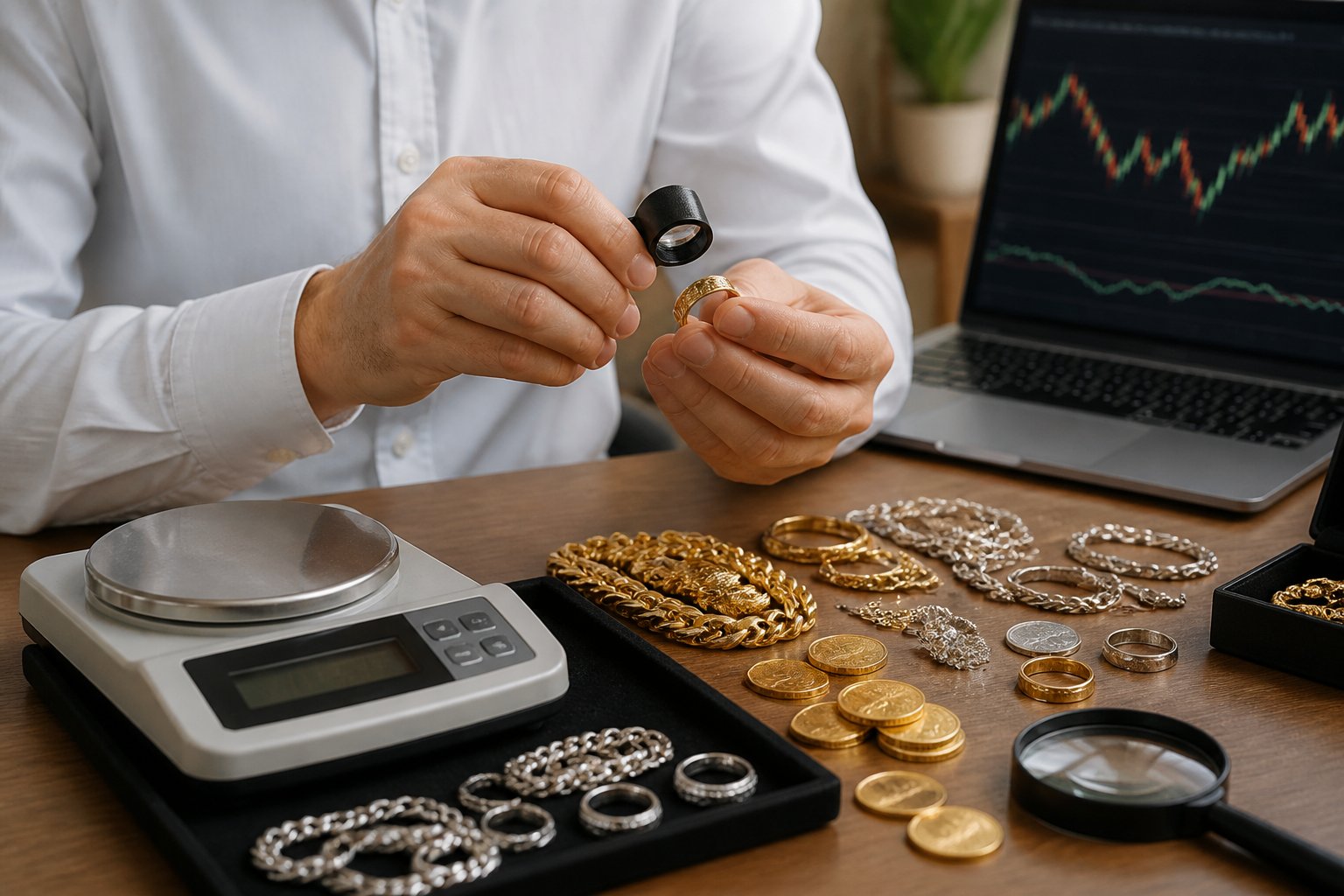
You need to know the live spot prices and the specific features of each item to estimate what buyers will actually pay. Check real-time rates, document purity and weight, and note any numismatic or condition-related premiums before you contact buyers.
Reviewing Current Precious Metal Prices
Check the live spot price for gold and silver on reputable sites like Kitco or GoldPrice.org at the time you plan to sell. Spot is quoted per troy ounce; if you have grams or pennyweights convert weight precisely to avoid rounding losses.
Record both bid and ask prices. Dealers typically pay a percentage below spot (the bid), so compare several dealers’ buy rates rather than relying on a published spot number alone. Also note any transaction fees, assay charges, or minimums the buyer applies.
If you hold bullion (bars, rounds, ETFs), value ties closely to spot adjusted for dealer spreads. For jewelry or mixed-metal pieces, expect additional adjustments for refining costs and labor to extract pure metal.
Factors Influencing Sale Price
Purity (karat for gold, fineness for silver) and accurate weight drive the baseline value. Use a jeweler’s scale and have hallmark stamps verified; lack of marks or mismatch between stamp and assay lowers offers.
Condition and form matter. Well-preserved bullion or certified coins command close-to-spot prices, while damaged jewelry, plated items, or pieces with stones reduce melt value. Rarity and collector demand can add significant premiums for coins and certain antiques—research recent auction or dealer sale prices for similar items.
Choose buyer type based on your goals: refiners and coin dealers value metal content and certification; pawnshops and local buyers may offer convenience but lower rates. Always get multiple written offers and factor in shipping, insurance, and any required certifications when comparing net proceeds.
Authenticating Ownership and Documentation
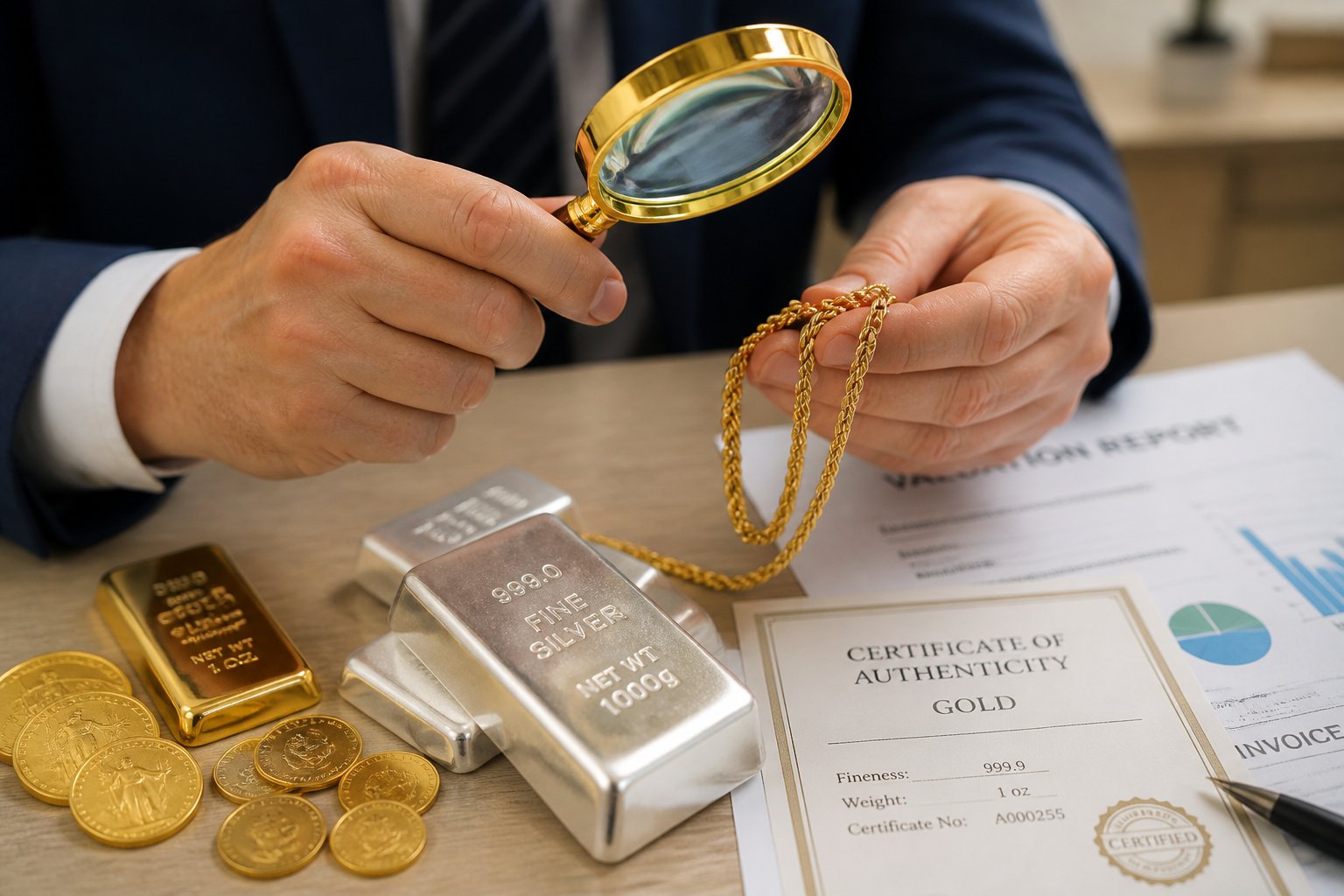
You need to prove provenance, purity, and legal right to sell. Gather any receipts, assay certificates, serial numbers, and ID so buyers can verify authenticity quickly.
Gathering Purchase Receipts and Certificates
Collect original purchase receipts, invoices, and any assay or certificate of authenticity that came with the item. For bullion bars and rounds, include manufacturer certificates and note serial numbers or matching tamper-evident packaging.
For jewelry, provide receipts showing weight, karat/purity, and any appraisals or jeweler’s repair records. Photos of hallmarks, assay stamps (e.g., “999” for .999 fine), and clear close-ups of maker’s marks help remote buyers and online verifiers.
Organize documents in a folder or digital scan set. Label each file with item type, weight, purity, purchase date, and seller to speed offers and raise buyer confidence.
Legal Considerations for Reselling
Confirm identity documents required by buyers and local laws before arranging a sale. Dealers commonly require government-issued ID for transactions; large cash sales may trigger Form 8300 reporting requirements.
Understand tax reporting and cost-basis records for capital gains. Keep purchase price receipts, date acquired, and any improvement or repair costs to calculate gain or loss on Schedule D if applicable.
Be aware of dealer policies on buybacks, returns, and chain-of-custody expectations. If selling privately, draft a bill of sale that lists item descriptions, serial numbers, sale price, date, and signatures from both parties.
Researching Potential Buyers
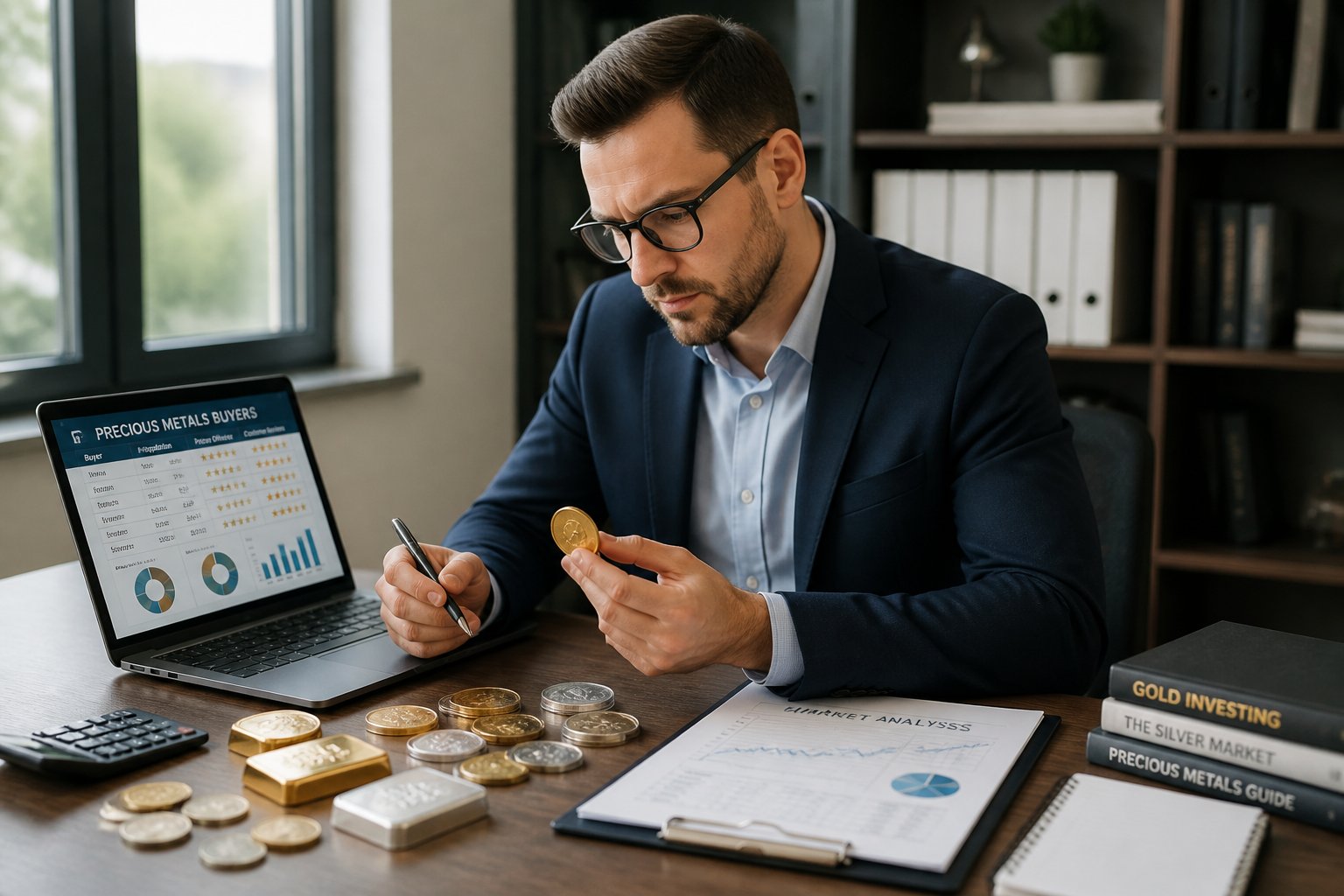
You should check who will handle testing, how they pay, and what fees or delays might apply. Confirm buyer credentials, compare local shop quotes with online offers, and prefer payment methods that provide traceable proof of funds.
Comparing Local Vs. Online Dealers
Local dealers let you see testing and get cash or check immediately. Visit at least two shops, ask for live testing (acid, electronic tester, or XRF), and compare net offers after any local sales tax or commission.
Online dealers often offer wider market pricing but require insured shipping and can take days to pay. Check their written offer process, how they appraise items on arrival, and whether they deduct assay or handling fees. Use tracked, insured shipping and photograph items before sending.
Make a quick comparison table:
- Local: immediate inspection, negotiate in person, possible higher overhead.
- Online: potentially better bullion pricing, requires secure shipping, delayed payment.
Evaluating Buyer Reputation
Look for documented track records, not just slick websites. Search for business name plus “reviews,” check BBB rating and Better Business Bureau complaints, and read recent customer reviews that mention payout accuracy and timeliness.
Verify licenses and memberships in industry groups (e.g., local jewelers’ associations or national coin dealers associations). Ask the buyer for references or examples of recent transactions, and confirm their physical address and phone number. Beware of buyers who refuse independent testing or pressure you to accept a quick offer.
Reviewing Payment Methods
Prioritize traceable, verifiable payments: bank transfer, certified check, or same-day cashier’s check. Cash is acceptable for small transactions but carries safety and documentation risks.
For online sales, expect ACH/wire transfers or insured check after the buyer completes assay. Ask how long payment will take, who bears bank fees, and whether partial payments are held pending assay. Get payment terms in writing and avoid buyers who delay payment without clear, documented reasons.
Preparing Items for Sale
Focus on removing dirt, securing readable markings, and grouping items by metal and weight so buyers can assess value quickly. Present items cleanly and organized to speed appraisal and improve offers.
Cleaning and Presenting Metals
Clean gently to preserve hallmarks and surface detail. For gold, soak pieces in warm water with a few drops of mild dish soap for 10–15 minutes, then brush lightly with a soft toothbrush and rinse. For sterling silver, use a silver polish cloth or a paste of baking soda and water applied with a soft cloth; avoid abrasive dips that can remove plating or damage patina.
Dry each piece thoroughly on a lint-free cloth and leave items separate rather than nested to avoid scratches. Reattach loose clasps temporarily only if safe, and secure fragile stones with soft padding for transport. Photograph each item from multiple angles and include close-ups of stamps, serial numbers, or maker’s marks.
Bring any paperwork that proves authenticity or provenance, such as receipts, certificates, or prior appraisals. Label items with brief notes (e.g., “14K ring, 3.2 g, amethyst”) to speed buyer inspection and help you compare offers.
Sorting by Type and Weight
Sort items by metal type first: separate 24K/18K/14K gold, sterling silver, and plated pieces. Keep jewelry with non-precious components (costume jewelry) apart; buyers often price those separately or won’t purchase them. Use small labeled bags or trays to avoid mix-ups.
Weigh items individually or in logical groups using a digital scale that measures grams to two decimal places. Record each weight next to the label and tally totals for each category. If you have chains, clasps, or items with significant stones, note whether weights include settings or are “as measured” to avoid disputes.
Prepare a simple inventory table for the buyer with columns like: Item, Metal/Purity, Weight (g), Mark/Stamp, Condition. This speeds appraisal and provides you documentation to compare offers from multiple buyers.
Understanding Transaction Processes
You will handle offers, payment methods, and common fraud tactics when you sell precious metals. Know how buyers value items, how payments are made, and what red flags indicate a scam.
Negotiating Offers
Start by knowing the spot price and the item’s purity. Ask the buyer how they calculate the offer — request the exact spot price, the percentage or dollar amount they deduct, and any additional fees. If selling jewelry, confirm whether they pay scrap value or consider collectible premiums.
Use itemized offers and get them in writing before you accept. Compare at least two written offers from different reputable buyers to see how margins and fees differ. Be prepared to walk away if the buyer refuses a clear breakdown or pressures you to decide immediately.
Prefer same-day electronic payments (bank transfer, cashier’s check) over cash if you need a documented trail. If you accept cash, count and photograph the bills and transaction receipt before leaving.
Recognizing Common Scams
Watch for buyers who refuse to show scales or who use vague purity tests. A trustworthy buyer will weigh items on a visible, calibrated scale and demonstrate how they test karat or fineness. If a buyer delays testing until after you leave or claims mysterious “adjustments,” treat that as a red flag.
Beware of lowball tactics like surprise fees, offering below-market “bulk” rates, or claiming your items are counterfeit without providing proof. Avoid buyers who insist on secrecy, demand upfront fees, or require you to mail items without insured, trackable shipment and an agreed appraisal method.
Trust clear documentation: itemized receipt, stated spot price, weight, fineness, fees, and payment method. Refuse transactions lacking these specifics.
Considering Tax Implications
You may owe taxes when you sell gold or silver. The IRS classifies most physical precious metals as collectibles, which affects capital gains treatment.
If you held the metal for more than one year, gains are typically long-term but taxed at a higher collectible rate (up to 28%) than regular long-term capital gains. Short-term gains (holding one year or less) are taxed as ordinary income, based on your tax bracket.
Report each sale accurately. Keep records of purchase dates, purchase price, sale date, sale proceeds, and any related costs (commissions, assay fees, shipping). These details determine your cost basis and taxable gain or loss.
Consider common ways to reduce or defer tax liability:
- Use a self-directed IRA or eligible retirement account to defer taxes.
- Harvest losses to offset gains in the same tax year.
- Transfer via inheritance, which may step up basis depending on circumstances.
State taxes and sales tax rules vary. Some states exempt bullion purchases from sales tax, while others do not. Check your state’s rules before you sell or buy to avoid unexpected costs.
If the amount is substantial, consult a tax professional. Complex transactions, large holdings, or cross-border sales often require tailored advice to ensure compliance and minimize tax impact.
Tax forms you may encounter include Form 8949 and Schedule D for capital gains reporting. Keep documentation for at least several years in case of audit.
Timing the Sale
You should monitor spot prices for gold and silver before deciding to sell. Prices fluctuate daily, so check reliable market quotes and notice short-term trends that affect your expected payout.
Consider macroeconomic drivers like inflation reports, interest rate decisions, and currency movements. These events can push prices higher or lower quickly, so time sales around clear market direction when possible.
Decide if you’re aiming for a quick sale or a higher price. If you need cash immediately, accept a fair market offer; if you can wait, set a target price and be prepared to hold until it’s reached.
Use a simple checklist to guide timing:
- Current spot price vs. past 30–90 day average
- Upcoming economic events or central bank announcements
- Personal liquidity needs and tax-year considerations
Avoid selling during extreme market panic or when buyers exploit urgent sellers. Short-term volatility can reduce offers, and you may get a lower percentage of spot when demand drops.
If your items are collectibles or have numismatic value, timing can differ from bullion. Research auction cycles and seasonal demand for jewelry or rare pieces to capture specialized buyer interest.
Set alerts and review offers from multiple buyers on the same day. Comparing offers in a narrow time window ensures you react to current market conditions rather than outdated quotes.