Buying physical gold can feel risky, but you can make safe, informed purchases by focusing on product type, dealer reputation, and secure storage. Start by deciding whether coins, bars, or IRA-eligible products fit your goals, then verify dealer credentials, compare spot price plus premiums, and arrange insured storage before completing a purchase.

You’ll learn how to evaluate dealers, confirm authenticity, handle transactions securely, and document purchases for taxes and future resale. Follow practical checks and simple precautions to reduce fraud risk and protect your investment over the long term.
Understanding Types of Physical Gold
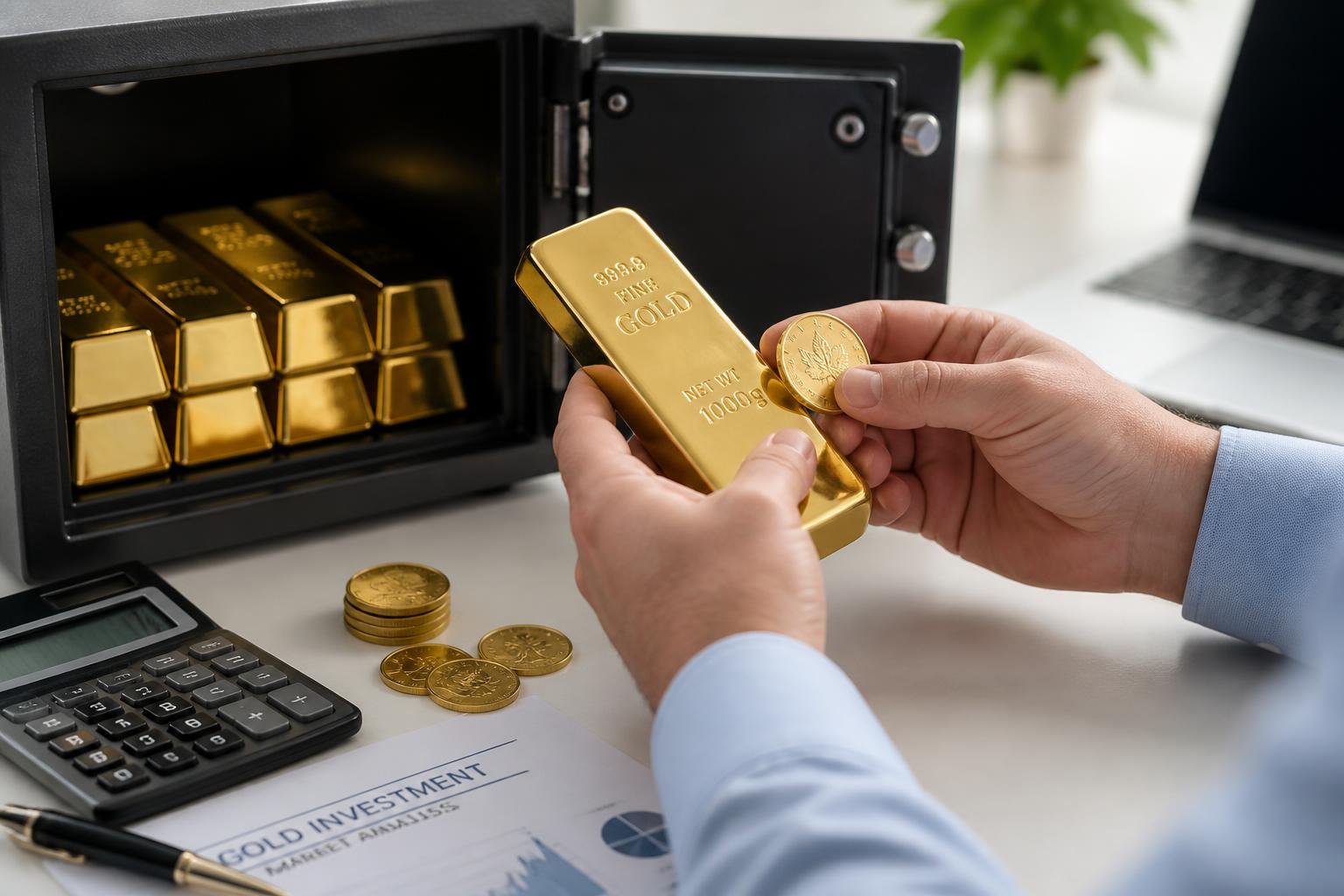
You’ll encounter three main forms of physical gold, each with distinct price, liquidity, storage, and resale implications. Choose based on budget, purity needs, and whether you prioritize resale ease or collector value.
Gold Bullion Bars
Bullion bars offer the most metal for the lowest premium over spot price. They come in weights from 1 gram to 400 ounces; common sizes for private investors are 1 oz, 10 g, and 100 g. Larger bars reduce per-ounce premiums but require more secure storage and can be harder to sell in small amounts.
Look for bars stamped with weight, purity (usually .999 or .9999), refiner/assayer mark, and a serial number for larger bars. Buy from accredited refiners or dealers listed on industry bodies to lower counterparty risk. Verify authenticity with weight, dimensions, and, when available, assay certificates or tamper-evident packaging.
Storage and liquidity matter: home safes increase theft risk; bank safe-deposit boxes limit immediate access. Allocated storage with insured vault providers preserves chain-of-custody but adds fees. When reselling, smaller well-known brands and standard weights typically fetch closer to spot.
Gold Coins
Government-minted coins carry legal tender status and recognizable designs that boost liquidity. Popular examples include the American Gold Eagle, Canadian Maple Leaf, and South African Krugerrand. Coins often sell at higher premiums than bars because of minting costs and market demand.
Coins vary in purity: many bullion coins are .999 or .9999 fine, while some like the Gold Eagle are .9167 fine; check specifications before purchase. Smaller fractional coins (1/10 oz, 1/4 oz) let you sell portions without breaking a larger bar, though they carry higher percentage premiums.
When buying, prefer sealed mint packaging or certified coins graded by reputable third parties for guaranteed condition. Watch for collector demand spikes which can temporarily raise prices above intrinsic metal value. Store coins in protective capsules; insured storage options apply if you hold significant value.
Collectible and Rare Gold Items
Collectible gold—proof coins, historical pieces, and designer medals—combine metal value with numismatic premiums. Rarity, condition, provenance, and demand determine price, often making valuations subjective and variable over time.
You must authenticate and grade these pieces through reputable numismatists or grading services. Condition (mint state, proof), original packaging, and verifiable history significantly affect resale value. Expect higher dealer markups and lower liquidity than standard bullion.
Consider long-term horizon and specialist advice before buying for investment. If you collect for enjoyment, prioritize pieces you value; if you collect for potential returns, insist on documented provenance, independent grading, and a clear exit market. Store collectibles separately with enhanced security and insurance that covers numismatic premiums.
Evaluating Gold Dealers and Retailers

Check dealer history, fees, authentication processes, and storage or shipping options. Compare prices and buy/sell spreads across multiple sources before committing.
Researching Dealer Reputation
Start with public records and customer reviews. Visit the dealer’s Better Business Bureau profile, look for A+ ratings and recent complaints, and read verified reviews on independent sites like Trustpilot or Google to gauge repeated issues.
Examine transaction transparency. Confirm price quotes include spot price, premiums, taxes, and shipping so you can compare total cost. Request sample invoices for past sales if available.
Ask about physical presence and longevity. Dealers with a brick-and-mortar office and at least several years of consistent trading are less likely to vanish than newly formed online-only entities. Verify corporate registration and business address.
Recognizing Red Flags
Watch for unusually low prices or pressure to buy immediately. Deep discounts below spot-plus-standard-premium often indicate counterfeits or bait-and-switch tactics.
Be wary if a dealer refuses third-party authentication. Legitimate dealers allow independent assays or provide recognized hallmarked products. Avoid sellers who insist on cash-only deals without receipts or who block returns.
Check payment and delivery terms closely. High non-refundable deposits, vague shipping insurance, or no-accountability storage are major concerns. Also avoid companies that lack a published buyback policy or that offer inconsistent buyback pricing.
Verifying Certifications
Confirm product authenticity through recognized stamps and certificates. For bullion coins and bars, look for manufacturer marks from mints like the U.S. Mint, Royal Canadian Mint, PAMP, or Valcambi, and ensure serial numbers and assay cards match the item.
Verify dealer credentials and industry memberships. Look for memberships in trade organizations such as the Industry Council for Tangible Assets (ICTA) or affiliations with national numismatic associations. These memberships do not guarantee honesty but signal commitment to industry standards.
Use third-party grading and assay services when available. Services such as NGC, PCGS (for coins), or independent assay labs provide documented verification that reduces your risk when buying higher-value pieces.
Methods for Secure Transactions
You should pick payment methods that leave a clear record, confirm pricing and fees before you pay, and always obtain verifiable paperwork proving the metal’s weight, purity, and provenance.
Choosing a Trusted Payment Method
Use payment options that provide audit trails and buyer protections. Bank wire transfers are standard for large purchases; they are fast, irreversible, and documentable. Confirm the beneficiary name and account details on a scanned invoice before sending funds.
Credit cards offer chargeback protection but often carry higher dealer premiums and may be refused for bullion over a certain amount. Avoid sending cash or using peer-to-peer apps that lack transaction records for high-value buys. For escrow services, select regulated platforms with timed release of funds only after you confirm receipt and authentication.
Always verify refund, cancellation, and dispute policies in writing. Save screenshots, emails, and transaction IDs until title transfer and any warranty periods expire.
Ensuring Transaction Transparency
Insist on an itemized invoice that shows spot price, dealer premium, taxes, shipping, and insurance separately. Compare the invoice premium to live market spot quotes at the exact timestamp of the invoice to verify you paid a reasonable markup.
Request written shipping terms: carrier name, tracking number, declared value, and insurance coverage. If the dealer uses insured courier service, confirm the shipment requires adult signature and offers end-to-end tracking.
For in-person purchases, count and inspect items before paying and get a signed receipt that lists serial numbers, weight, and purity. Keep digital and physical copies of all communications and receipts for tax and resale purposes.
Requesting Authentic Documentation
Ask for a certificate of authenticity (COA) that lists mint, year, weight, purity (e.g., .9999), and serial number if applicable. For sealed bars or coins, request photos of the original sealed packaging and matching serials prior to payment.
For high-value or older coins, request third-party grading or assay reports from recognized services (e.g., NGC, PCGS, or an assay office). Verify these reports on the grading service’s website using the certificate or serial number.
If provenance or chain-of-custody matters, request documented purchase history. Confirm the dealer will honor returns or third-party verification disputes within a stated timeframe, and get that policy in writing before completing payment.
Assessing Product Authenticity
You need reliable, verifiable markers to confirm a gold item’s purity and origin. Focus on readable stamps, independent testing, and valid assay documentation to reduce fraud risk.
Identifying Hallmarks and Stamps
Look for clear stamps showing purity (e.g., 999, 999.9, 24K) and the manufacturer’s mark. Counterfeiters often miss fine detail, so use a loupe (10x) to inspect edges, reliefs, and font consistency.
Check for a country or refinery symbol when buying minted bars or coins. Compare the mark placement and design against official references from the mint or refinery website. Beware items with only vague claims like “fine gold” and no numeric purity.
If a coin or bar carries a serial number, verify it with the issuer when possible. For older or circulated pieces, expect wear; however, missing or poorly struck hallmarks are a red flag. Photograph markings and save seller listings for records.
Third-Party Verifications
Third-party verification adds an independent layer of trust. Look for coins or bars certified by reputable grading or bullion services (e.g., NGC, PCGS, LBMA-listed refiners). Certification sleeves and holographic seals should match the issuer’s current security features.
Insist on in-person non-destructive tests if buying locally: electronic gold testers, density measurement, and ultrasound devices can spot many fakes. For remote purchases, request high-resolution photos and a dated authentication certificate from an accredited lab.
Keep proof of verification with the item for resale or insurance. If a dealer resists third-party checks or returns, treat that as a serious warning sign and consider walking away.
Understanding the Role of Assay Certificates
An assay certificate documents an independent lab’s measurement of weight and purity. It should include: issuer name, assay date, item description, measured purity (e.g., 999.9), weight, serial number (if present), and the assayer’s signature or stamp.
Verify the lab’s accreditation status—look for ISO/IEC 17025 or national accreditation. Counterfeit certificates exist; confirm the certificate number and details directly with the issuing laboratory when possible.
Use assay certificates as part of your paperwork chain. They strengthen provenance for insurance and resale, but balance them against physical checks; a certificate alone doesn’t guarantee the item hasn’t been swapped after testing.
Safe Storage Solutions
Store gold where it stays secure, insured, and accessible when you need it. Consider cost, theft risk, insurance requirements, and how quickly you need physical access.
Private Safes
A high-quality home safe gives you immediate access and full control. Choose a safe rated to at least UL RSC or EN 1143-1 for burglary resistance; concrete-filled, boltable models reduce theft risk. Anchor the safe to the floor or a reinforced wall and conceal it behind fixtures or in a closet to reduce discovery.
Protect against fire and water too. Select a safe with a fire rating (e.g., 60–120 minutes at specified temperatures) if you want fire protection; verify temperature and duration ratings. Add a waterproof barrier or place contents in sealed bags for extra moisture protection.
Insure your holdings properly. Homeowners policies often cap coverage for valuables; buy a scheduled jewelry/valuable endorsement or separate bullion policy that names your specific items and values. Keep receipts, purchase records, and photos in a separate location or digitally encrypted.
Bank Safety Deposit Boxes
Safety deposit boxes at banks reduce in-home theft risk and typically offer strong physical security. Check local availability, size options, and whether banks in your area require special forms of ID or residency for access. Note that banks limit access hours and may require appointments.
Be aware of limitations and ownership issues. Banks generally do not insure contents — you must insure them yourself. Also confirm the bank’s policy on estate access; some institutions restrict access after an owner’s death unless arrangements or powers of attorney are in place.
Consider practicality and cost. Annual rental fees vary by box size and bank; compare prices and proximity to your home. For frequent transactions, the bank’s hours and travel time may make this option less convenient than a private safe.
Professional Vault Services
Professional vaults offer high security, institutional-grade facilities and optional insurance packages. Look for vault providers that handle allocated storage, provide independent third-party audits, and use segregated accounts to ensure your specific bars or coins remain identifiable.
Compare service features and fees. Evaluate annual storage fees, one-time setup costs, withdrawal/transfer charges, and minimum holdings rules. Ask about insurance: some vaults include coverage up to declared values, while others require you to purchase separate insurance that names the vault and contents.
Verify regulatory and access considerations. Choose vaults with clear contractual terms on access procedures, audit rights, and what happens in insolvency scenarios. Confirm how quickly you can take physical delivery and whether the provider ships to your address or requires in-person pickup.
Legal and Tax Considerations
You need to know whether your jurisdiction restricts ownership, what paperwork you must keep, and how purchases and sales are taxed. These factors affect where you buy, how you store, and how much you ultimately keep after taxes and fees.
Local Gold Ownership Laws
Check national and local laws before buying physical gold because some countries limit private ownership, require permits, or ban import/export without declaration. For example, India requires declarations for large imports and may have reporting thresholds; some Gulf states and Latin American countries have specific import/export documentation.
If you plan to cross borders with bullion, verify customs rules and limits on undeclared precious metals. Violating import/export laws can lead to seizure, fines, or criminal charges.
Also confirm whether your municipality or bank imposes restrictions on storing bullion in safety deposit boxes or local vaults. Some jurisdictions regulate vault operators and require registration or annual inspections.
Reporting Requirements
You must keep purchase receipts, assay certificates, and any export/import permits to prove provenance and value. Many countries require sellers or dealers to report large transactions—often transactions above a set threshold (commonly USD 10,000 or local equivalent)—to tax or financial authorities.
When selling, you may need to disclose buyer information or report capital gains. If you use a dealer, ask which reports they file and what records they provide you. Maintain a clear audit trail: date, weight, purity, serial numbers (if present), price paid, and dealer details.
Tax Implications of Purchases
Taxes vary by country and by product type. In many jurisdictions, investment-grade bullion coins and bars are exempt from sales/VAT tax, while collectible coins may carry VAT. For example, several EU countries exempt investment bullion from VAT, but commemorative coins often remain taxable.
Capital gains tax applies when you sell at a profit in many countries; compute gain as sale price minus purchase price and documented expenses. Consider holding period rules that affect tax rates—short-term gains can be taxed at higher ordinary income rates.
If you store bullion in a foreign vault, be aware of reporting obligations for offshore assets and potential withholding taxes upon repatriation. Work with a tax advisor to classify purchases correctly and to prepare for recordkeeping and tax filings.
Recognizing Common Scams and Risks
You need to spot counterfeit items, hidden costs, and unlicensed sellers before you commit funds. Each risk has specific signs and simple checks you can perform to protect your purchase.
Counterfeit Products
Counterfeits range from plated base metals to cast bars with embedded cores. Verify weight, dimensions, and density with a scale and calipers; a genuine 1 oz American Eagle should match published specs within small tolerances. Use a magnet—gold is non‑magnetic—and perform a visual inspection for incorrect fonts, misaligned mint marks, or poor edge reeding.
Get documentation: request assay certificates for bars and purchase receipts tied to serial numbers. For higher-value pieces, use an acid test, XRF analysis, or a certified refiner’s verification. If a deal requires secrecy, cash drops, or shipping without tracking, treat it as risky.
Hidden Fees
Sellers often advertise a low “spot plus” price but add markups, shipping, insurance, and restocking or verification fees. Ask for an itemized invoice before you pay. Compare the dealer’s premium (%) over spot across coin types—some coins carry much higher premiums than generic rounds.
Watch for buyback terms that reduce the quoted resale price, or storage contracts with annual fees that escalate. If you choose allocated storage, confirm who holds legal title and whether insurance covers transit and theft. Use a checklist: premium, shipping, insurance, storage, and resale commission.
Unauthorized Sellers
Unauthorized sellers include unregistered dealers, online accounts with fake reviews, and individuals offering “too good to be true” discounts. Verify dealer credentials: membership in industry groups (e.g., local bullion associations), a physical business address, and verifiable customer service contacts.
Check public records and reviews across multiple platforms; call the listed phone number to confirm responsiveness. For private sales, insist on in‑person inspection and documented chain of custody. If a seller refuses verifiable ID, third‑party escrow, or returns, do not proceed.
Reviewing Purchase Documentation
When you buy physical gold, verify the invoice for seller details, item description, price, and date. Confirm the weight, purity (e.g., .999), and serial number for bars or coins on the receipt.
Ask for an assay or certificate of authenticity and check it against known issuer formats. Certificates should state the manufacturer, metal content, weight, and fineness; confirm the serial number matches the piece when applicable.
Keep proof of payment and delivery records to document chain of custody. These documents help with insurance claims, resale, and tax reporting.
Use a short checklist to review documents quickly:
- Seller name and contact
- Item description (type, weight, purity)
- Serial number / mint marks
- Certificate of authenticity / assay
- Payment method and invoice
- Delivery or storage confirmation
Inspect documents for signs of alteration and verify dealer credentials independently. Cross-check the seller against industry memberships, online reviews, and regulatory registrations.
Retain both physical and digital copies in secure storage. Store originals with other valuables and keep scanned backups encrypted for easy access when selling or claiming loss.
Long-Term Security and Insurance
Treat physical gold as a long-term asset and plan storage accordingly. You can store bullion at home, in a safe-deposit box, or with a professional vaulting service; each option balances access, cost, and risk differently.
Insure your gold against theft, loss, and damage. Check whether your homeowner’s or renter’s policy covers collectible metals and, if not, buy a rider or a separate fine-arts/valuable-items policy that lists replacement cost and limits.
Use tamper-evident packaging and documented provenance to simplify claims. Keep purchase receipts, assay certificates, and serial numbers in a separate secure location or digital vault to prove authenticity and ownership quickly.
Weigh the trade-offs of private versus professional custody. Home storage gives immediate access but higher personal-liability risk; insured third-party vaults reduce theft risk and often include climate control and independent audits.
Consider the cost structure and service terms before committing. Look for insurers and vaults with explicit coverage amounts, low deductibles, and transparent claim histories. Ask about transfer, access windows, and what documentation they require for a payout.
Maintain an annual review of your coverage and storage strategy. Update declared values as market prices change, and confirm that your chosen insurer or custodian remains solvent and reputable.