You want to know why coins cost more than rounds and whether that extra price actually buys anything meaningful. Coins usually carry higher premiums because they offer government backing, recognized designs, and stronger collectible demand, while rounds focus on raw metal value and lower cost. That difference affects resale, trust, and how quickly you can convert metal to cash.
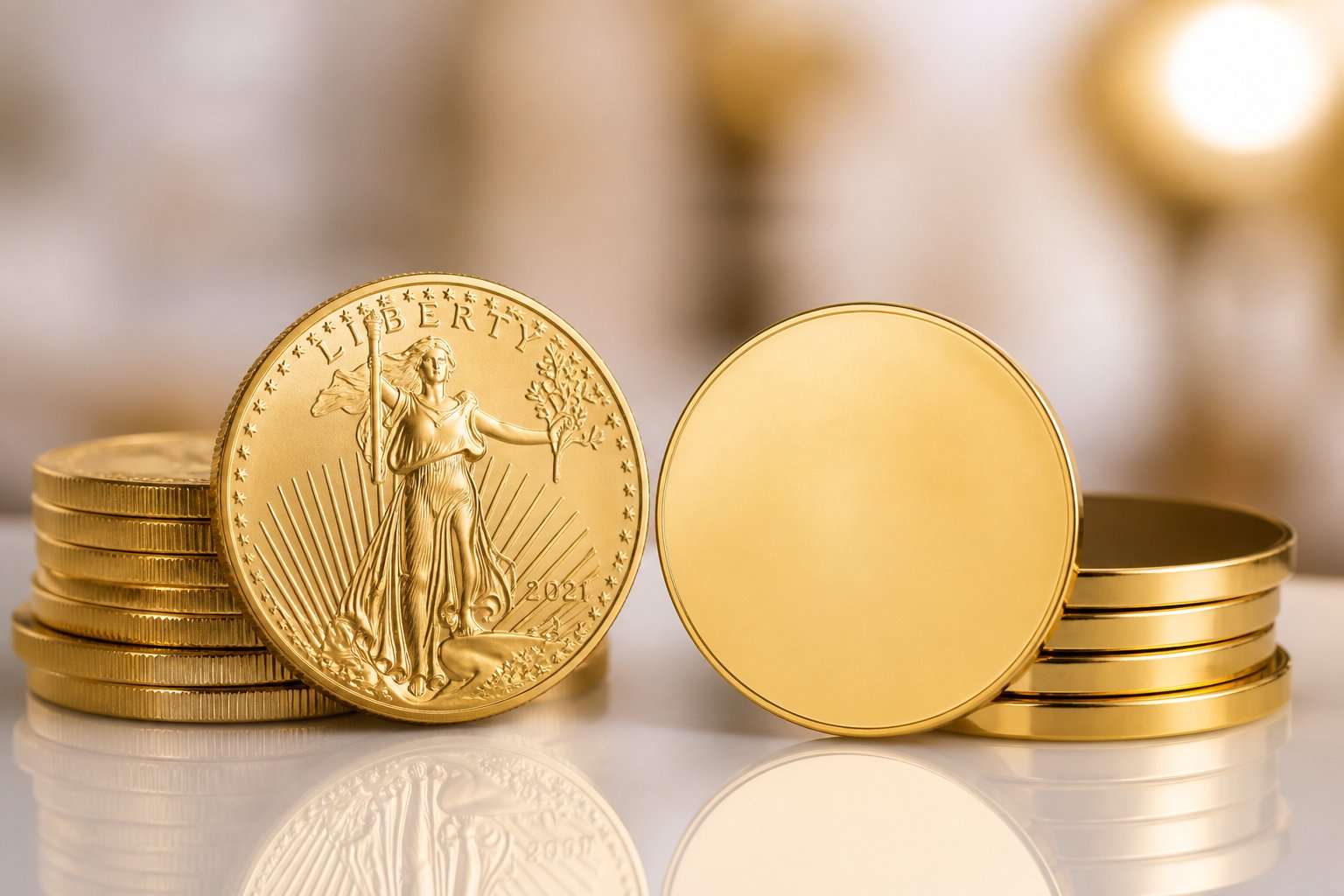
As you explore production, market demand, and long-term value, you’ll see why some buyers pay more for coins despite identical silver content. The article will walk through design and minting factors, legal-tender credibility, distribution and premium structures, and practical implications so you can decide whether coins or rounds suit your goals.
Understanding the Difference Between Coins and Rounds
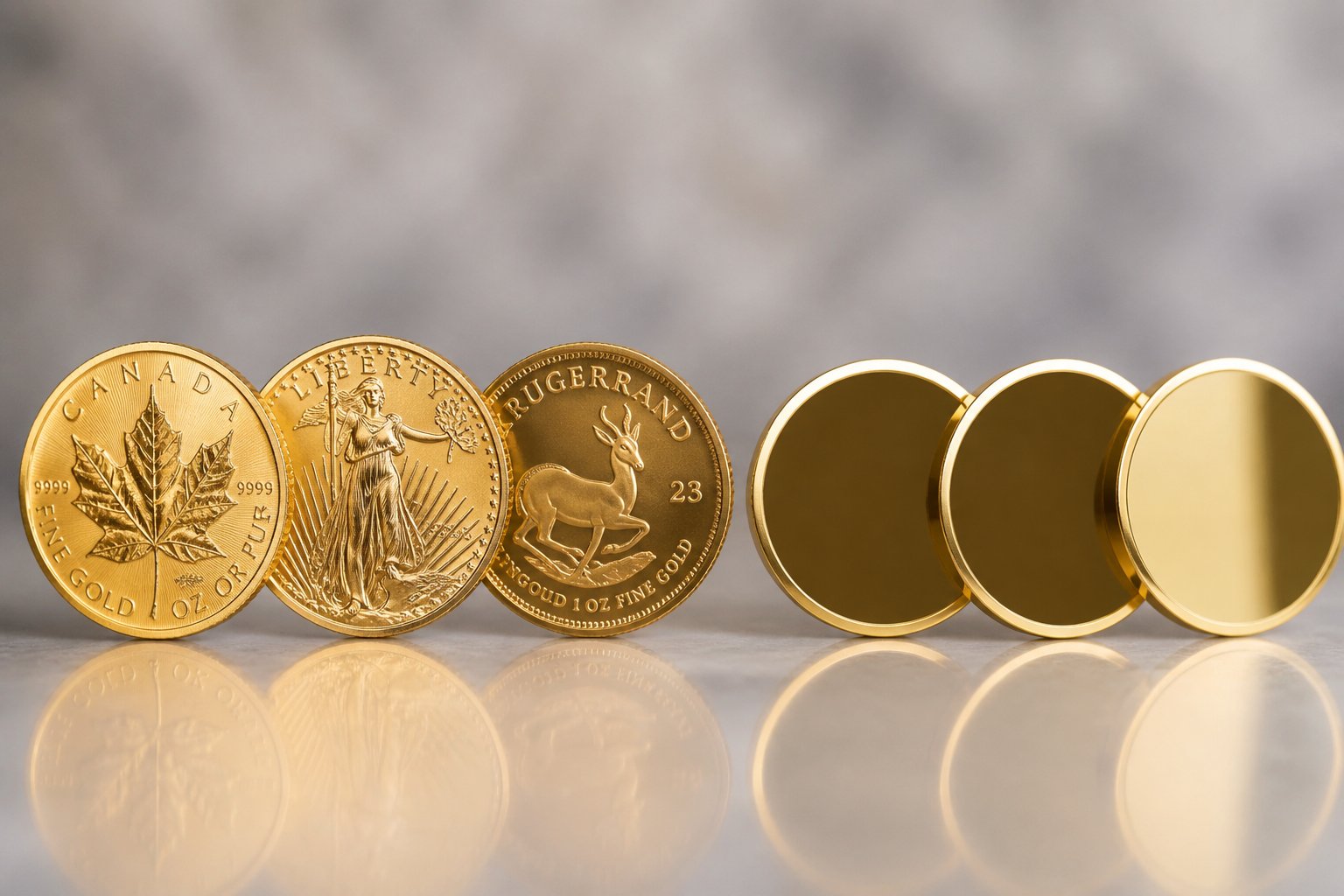
You’ll learn how coins and rounds differ in manufacture, markings, and market treatment. The distinctions affect resale value, tax treatment, and collector demand.
Definitions and Key Characteristics
Coins are government-issued pieces of metal stamped with a face value, a national emblem, and a mint mark. They carry exact weight and purity guarantees backed by the issuing authority, which makes them widely recognized and easier to authenticate.
Rounds are privately minted, generally match standard weights (e.g., 1 oz), and emphasize design variety rather than government backing. They typically display metal content and purity but lack a legal denomination.
Coins often command higher premiums because collectors and investors pay for official provenance, historical designs, and restricted mintages. Rounds usually sell at lower premiums since their value is driven almost entirely by metal content and the producer’s reputation.
Legal Tender Status
Legal tender means the government assigns a face value and guarantees authenticity and weight. Coins bearing legal tender status can, in theory, be used to settle debts at that face value, though their melt value usually exceeds the denomination. That government guarantee enhances buyer confidence and often reduces dealer spreads.
Rounds lack legal tender designation and therefore do not carry a government guarantee. You rely on the private mint’s hallmark and third-party assays for verification. In some jurisdictions, legal tender status also affects tax treatment and import rules, which can change effective cost and liquidity.
Historical Origins
Coins trace back millennia to sovereigns who stamped metal to certify weight and purity for commerce and taxation. Governments used imagery and inscriptions to communicate authority, which created durable trust in the object’s value. Many modern bullion coins continue that lineage, blending monetary symbolism with precise standards.
Rounds emerged more recently as private mints sought to meet investor demand for low-premium bullion. They adopted coin-like shapes and standardized weights to facilitate trade while avoiding sovereign regulation. Over time, rounds became popular for affordable metal ownership but never inherited the institutional assurances that coins provide.
Production and Design Factors
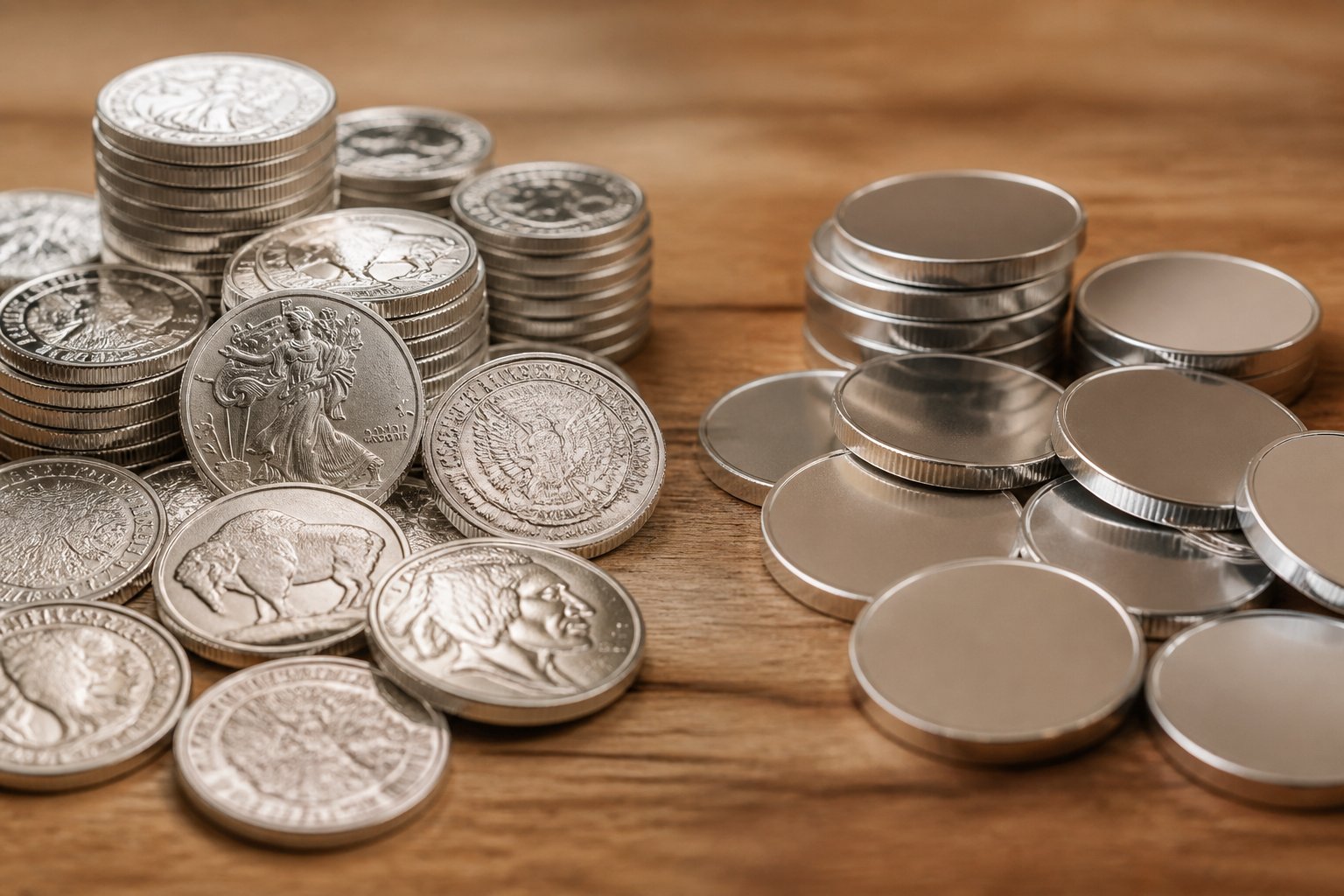
You pay for more than metal when you buy government-minted coins: specialized equipment, multiple production stages, official artwork, and strict inspection standards all add cost and perceived value.
Minting Process
Government mints invest in heavy-duty presses that strike coins at very high pressures to create sharp, long-lasting relief. You’ll see multi-stage production: blanking, annealing, cleaning, upsetting (edge-raising), and final striking. Each stage requires different machines and skilled operators, which increases per-piece labor and overhead compared with private-round producers.
Many bullion coins receive multiple strikes and use specially prepared planchets (e.g., proof or high-relief blanks). Those extra strikes improve detail and finish but slow throughput, so fewer coins are produced per hour and the unit cost rises.
Artistry and Detail
Official coins often feature commissioned designs from named sculptors and engravers. You benefit from original, copyrighted motifs and portraits that carry cultural or historic significance, not generic or repeatable art. That artistic pedigree increases collectible demand and supports higher premiums.
Design complexity matters: micro-engraving, reeded or lettered edges, color application, and selective frosting all add time and tooling. Private rounds tend to use simpler, repeatable dies to lower expense, while coins prioritize fine detail and uniqueness.
Quality Controls
Mints operate formal quality-control protocols you depend on when assessing authenticity and condition. Samples undergo dimensional checks, weight verification, and visual inspection under magnification. For special issues, mints keep production logs and certify mintage limits.
You also get consistent grading readiness: uniform finishes and strict tolerances reduce post-mint variance, which preserves resale value. Private mints may inspect, but they rarely match the documentation, statistical sampling, and chain-of-custody practices of national mints.
Market Demand and Collectibility
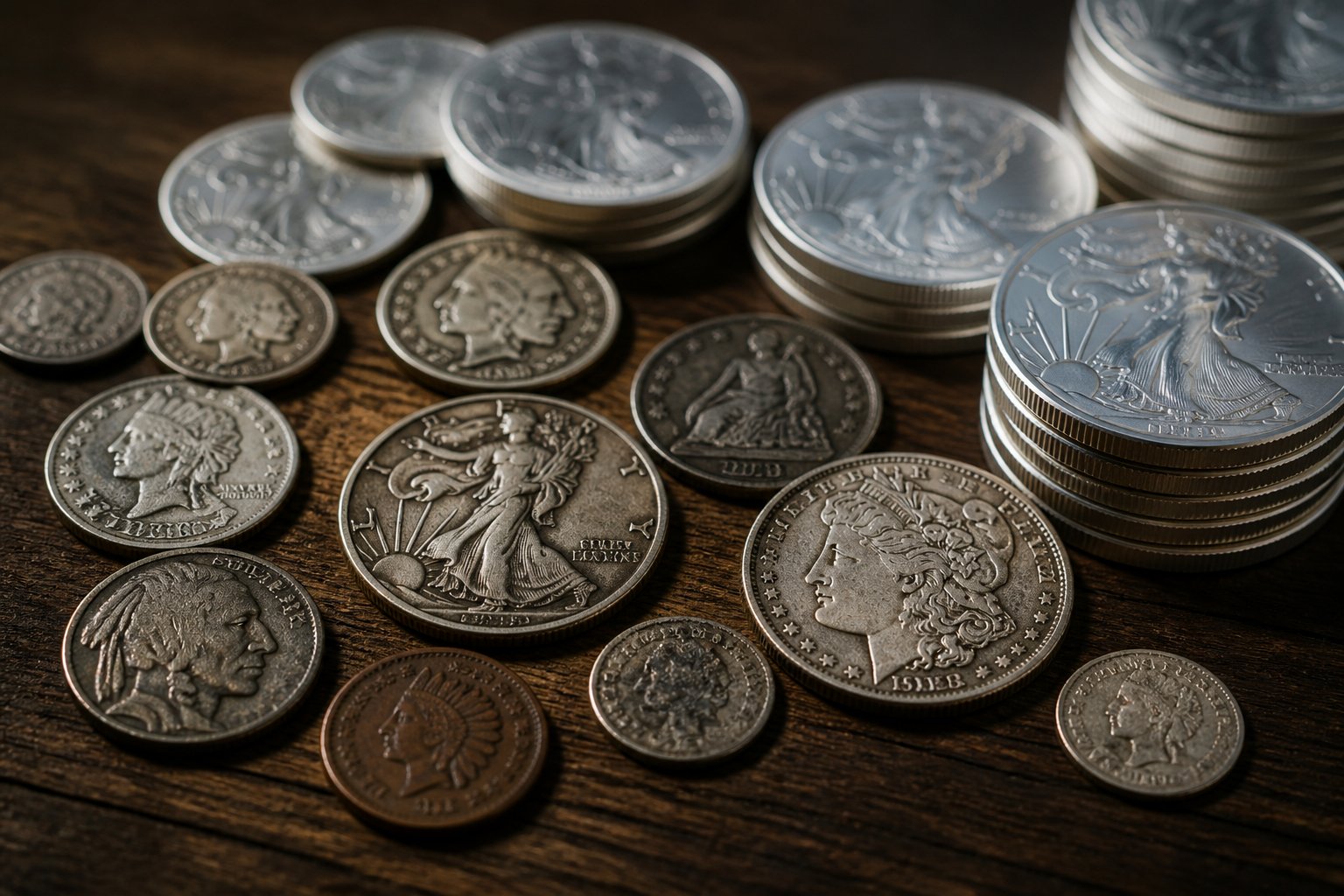
Coins often carry higher premiums because collectors and investors drive steady demand, mintages can be limited by design or program, and historical resale performance supports price confidence.
Popularity Among Collectors
You’ll find government-minted coins—like American Silver Eagles or Canadian Maple Leafs—command stronger interest from collectors than generic rounds. Collectors value official designs, mint marks, and graded examples; those attributes make coins desirable for display and long-term holding.
That demand translates into higher premiums at purchase. Dealers and auction houses price coins above melt value because buyers expect authentication, consistent demand, and the prestige of recognized series. You should expect collector-driven premiums to remain useful when selling through specialty channels.
Limited Mintage
Limited mintage directly increases a coin’s scarcity. When a national mint sets a fixed production run or issues special releases (proofs, low-run finishes, or anniversary pieces), those coins become inherently rarer than open-mintage rounds.
Scarcity affects pricing before and after release. You’ll often pay more at launch for low-mintage coins, and secondary-market prices can rise if demand outpaces remaining supply. Keep an eye on official mintage numbers and special-issue announcements to gauge potential scarcity-driven premiums.
Resale Value Trends
Coins typically show stronger resale consistency than rounds because secondary markets readily accept recognized designs. You’ll see narrower buy-sell spreads for popular government issues, especially in graded or certified condition.
Resale value depends on condition, market recognition, and demand cycles. While bullion spot price moves drive base value, coins can retain additional premium during stable or rising markets. Expect higher liquidity through established dealers and auction platforms, though specialized coins may fetch variable multiples based on rarity and collector interest.
Government Backing and Assurance
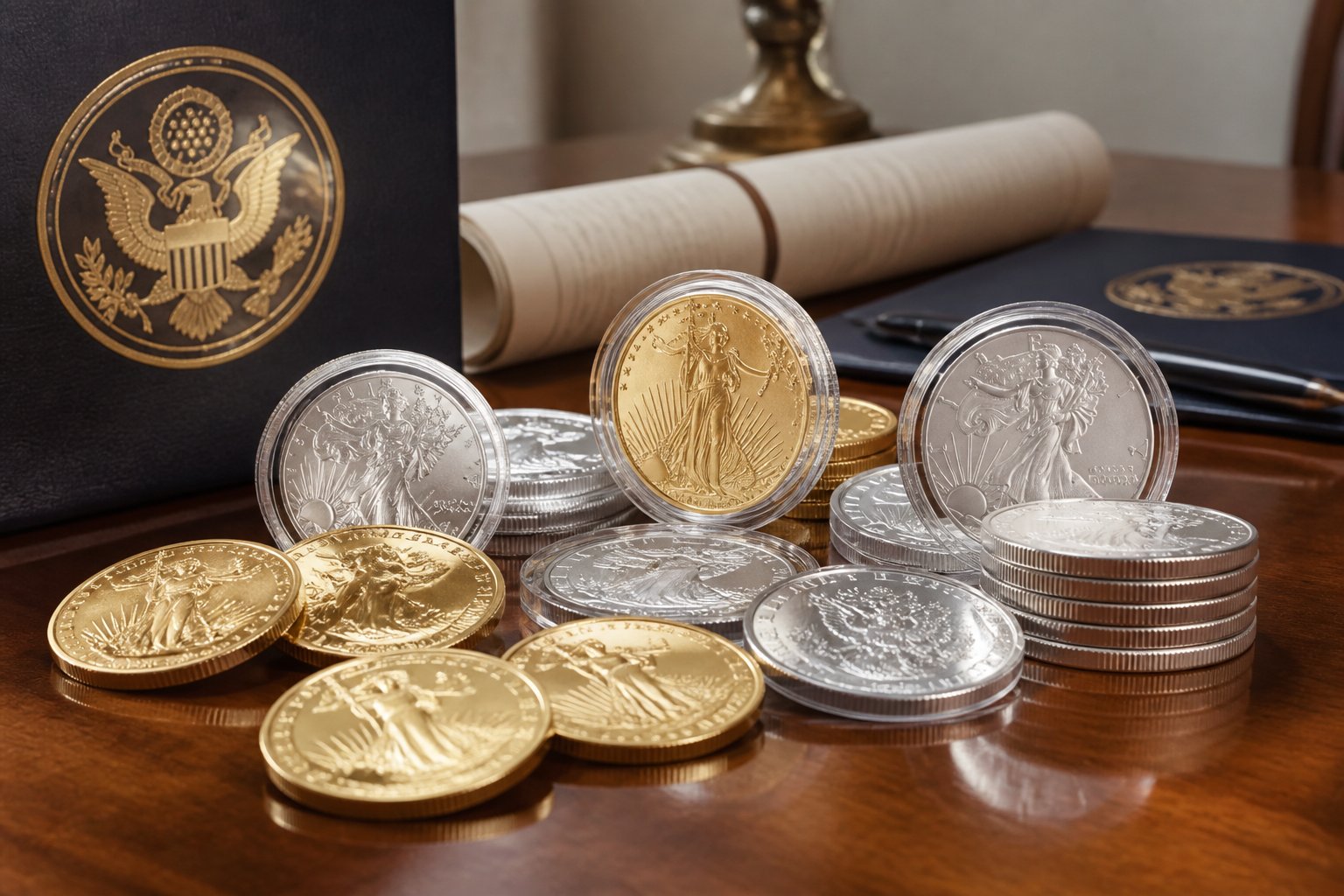
You get higher price certainty and easier resale when an item carries official backing, strict purity claims, and strong anti-counterfeit features. These factors affect liquidity, dealer premiums, and buyer confidence.
Mint Reputation
A recognized mint reduces your sale friction and often raises the premium above spot price. Mints like the U.S. Mint, Royal Canadian Mint, and Perth Mint have decades of consistent production, official legal-tender status, and audited processes that buyers and dealers recognize instantly.
When you buy a coin from these mints, you tap into a global market of collectors and investors who accept that brand without additional verification. That acceptance shortens negotiation time and expands where you can sell — auction houses, coin dealers, and many online platforms list these coins at predictable prices.
Private mints usually lack that universal recognition. You can still sell rounds quickly, but expect tighter margins and more variance in offers because buyers weigh the issuer’s track record before bidding up price.
Fineness Guarantees
Gold and silver coins from government mints come with stated fineness and weight backed by official guarantees. For example, bullion coins commonly show .999 or .9999 purity and specific troy-ounce weights that governments legally endorse.
You rely on those guarantees when calculating intrinsic metal value. Dealers price government coins with a smaller uncertainty premium because assay risk is lower; they don’t need to deduct for unknown impurities or weight discrepancies.
Rounds may state the same fineness, but private guarantees lack sovereign enforcement. That forces dealers to factor in assay testing costs or apply larger discounts, which is why coins typically trade at higher premiums relative to rounds even when metal content matches.
Authentication Measures
Government mints invest in authentication features that reduce counterfeiting risk and protect your investment. Features include micro-engraving, laser‑etched security marks, reeded edges with specific patterns, and advanced radial lines or latent images that scanners and trained dealers can verify quickly.
You benefit directly: faster verification means more venues will accept your coin at a higher price. It also lowers the need for third‑party grading in many cases, saving time and fees when you sell.
Private rounds generally lack these layered security systems, or their features vary widely between issuers. That variability forces buyers and dealers to rely on external grading or testing, which increases transaction costs and compresses resale value compared with government-backed coins.
Influence of Premiums and Distribution Channels
Coins usually carry higher premiums because of production complexity, brand recognition, and distribution steps that add cost. These factors affect what you pay at retail and how quickly you can resell the piece.
Dealer Markups
Dealer markups on coins are typically higher than on rounds because dealers account for guaranteed authenticity, buyback liquidity, and marketing of recognizable designs. You pay extra when a dealer covers shipping, authentication tools, and the risk of holding branded inventory like American Eagles.
Markup sizes vary by product and seller. Expect lower margins on generic rounds and bars sold in bulk, and higher margins on government coins sold individually or in proof/uncirculated packaging.
When you buy from a brick-and-mortar dealer, staffing and storefront costs push the markup higher than online-only sellers. Compare published buy/sell spreads and ask for invoice pricing to see the real difference.
Packaging and Presentation
Coins often arrive in capsules, mint-sealed flips, or branded tubes that preserve condition and signal authenticity. That packaging increases per-piece cost versus loose rounds packed in generic rolls. You benefit from protection: mint packaging helps maintain numismatic grade and resale appeal.
Mints also include certificates of authenticity, serialized packaging, or decorative presentation boxes for proofs and limited runs. Those extras justify higher premiums because they appeal to collectors and make inventory easier for dealers to market.
If you prioritize low cost per ounce, choose unbranded rounds or bulk bars with minimal packaging. If you prioritize resale and collector appeal, the packaging on coins adds measurable value.
Supply Chain Considerations
Supply chain steps for coins are more layered: mint production, government or private distribution networks, authorized dealers, and secondary-market shops. Each step adds handling, storage, and transportation cost that you ultimately pay for.
Government mints may control release quantities and use allocation policies during high demand. That limited distribution creates scarcity-driven premiums you face as a buyer.
For rounds, production and distribution often move directly from private mints to wholesalers and retailers, reducing stops and costs. Track lead times and allocation notices from mints to time purchases when premiums narrow.
Long-Term Value Considerations
When you evaluate long-term value, think beyond spot price. Collector demand, legal-tender status, and recognizability can preserve or increase a coin’s resale premium over time.
You should expect government-minted coins to retain liquidity more consistently. Dealers and casual buyers recognize official designs and face values, so coins often sell faster and at narrower bid-ask spreads than generic rounds.
Consider tax and estate implications as well. In some jurisdictions, certain government coins receive favorable tax treatment or easier transferability, which can affect your net return when you sell or pass assets to heirs.
Factor in potential numismatic appreciation. Unusual mintages, historical significance, and condition can create value above metal content. Rounds rarely capture these collector premiums, so their price tends to track metal value more closely.
Use this checklist when assessing long-term prospects:
- Recognizability: Will buyers immediately trust the piece?
- Tax rules: Does the coin have preferred tax treatment in your location?
- Collectability: Is there a path for numismatic value to develop?
- Liquidity: How easy will it be to convert to cash?
You should also weigh storage and security costs. High-premium coins may justify insured storage and provenance documentation; low-premium rounds favor cost-efficient bulk storage.
Practical Implications for Investors and Collectors
You’ll pay higher premiums for government-minted coins because they carry legal-tender status, recognized branding, and often tighter market liquidity. That means selling them is usually easier and faster, especially to dealers and institutional buyers.
If your goal is to maximize metal per dollar, rounds typically offer lower upfront cost and closer tracking to spot price. Rounds suit stacking and accumulation strategies where collectibility and resale convenience are secondary.
Consider tax and reporting differences where you live. Some jurisdictions offer favorable treatment for government bullion; others treat all precious metal the same. Check local rules before choosing a long-term allocation.
Use the following quick comparison to guide decisions:
| Factor | Coins | Rounds |
|---|---|---|
| Premium over spot | Higher | Lower |
| Liquidity to mainstream buyers | Very high | High to moderate |
| Collector/numismatic upside | Possible | Limited (unless special issue) |
| Best for | Resale, legal-tender benefits, collecting | Cost-efficient metal accumulation |
You should also weigh storage and insurance costs. Higher-value coins might increase insurance premiums or require stronger custody arrangements. Rounds let you buy more metal for the same budget, but verify buyback terms and counterparty reputation.
Finally, base your choice on investment horizon and intent. If you plan to trade frequently or rely on recognized coin programs, prioritize coins. If you aim to build metal weight cheaply and accept slightly narrower buyer pools, rounds likely serve you better.