Silver has a long-standing history as a reliable store of value, serving both industrial and monetary purposes for thousands of years. Compared to Bitcoin, which is relatively new and digital, silver offers tangible assets that some investors find less volatile and more accessible.
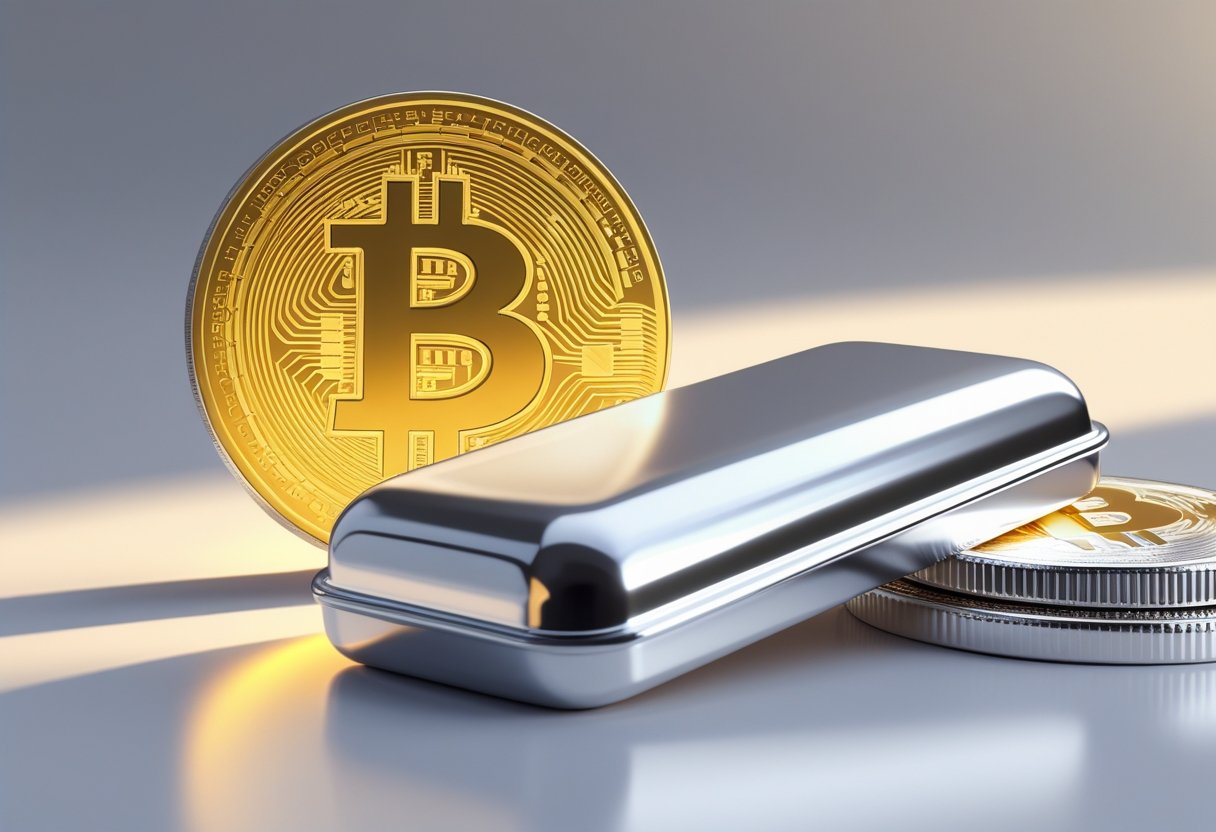
Silver is often seen as a better investment than Bitcoin due to its lower risk and real-world applications, providing stability that digital currencies have yet to consistently demonstrate. While Bitcoin’s limited supply and rapid growth attract investors, its price remains highly sensitive to market shifts and regulatory changes.
Investors seeking a hedge against inflation and economic uncertainty may prefer silver for its proven track record and physical presence. This makes silver a compelling choice for those prioritizing steady wealth preservation over rapid but unpredictable gains.
Intrinsic Value of Silver Compared to Bitcoin
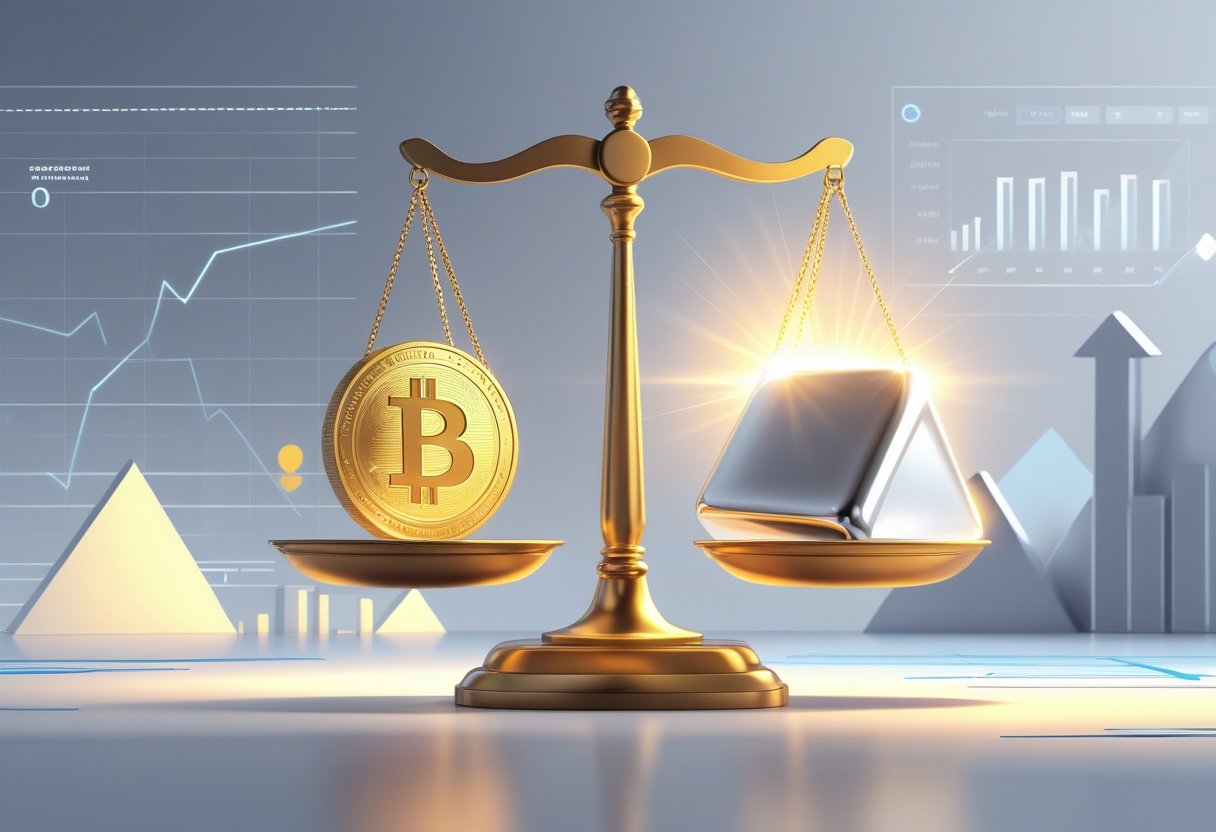
Silver holds value through its physical form, historical monetary role, and industrial usefulness. Bitcoin’s value, by contrast, depends on network adoption and market perception rather than tangible or practical utility.
Physical Asset Versus Digital Asset
Silver is a tangible metal, physically measurable and usable in multiple contexts. Its value is tied to its physical presence and inherent properties such as conductivity and malleability. Investors can hold silver coins or bars, offering direct possession and storage of the asset.
Bitcoin exists solely as a digital token on a blockchain network. It has no physical form and depends entirely on digital infrastructure and user trust. Its value fluctuates with market sentiment rather than physical scarcity or utility.
Historical Use as Money
Silver has been used as currency for thousands of years. Civilizations worldwide adopted silver coins for trade, savings, and wealth preservation. Its long history as money contributes to its acceptance and perceived intrinsic value.
Bitcoin, launched in 2009, is a recent innovation. While it aims to act as “digital gold,” it lacks the extensive historical record and proven longevity of silver as a store of value or medium of exchange over centuries.
Industrial Applications Driving Demand
Silver’s demand is significantly driven by industrial uses beyond investment. It is essential in electronics, solar panels, medical devices, and jewelry due to its conductivity and antimicrobial properties.
In contrast, Bitcoin has no industrial applications. Its value comes entirely from its design as a decentralized digital currency and store of value, without physical demand factors influencing its price.
Volatility and Stability
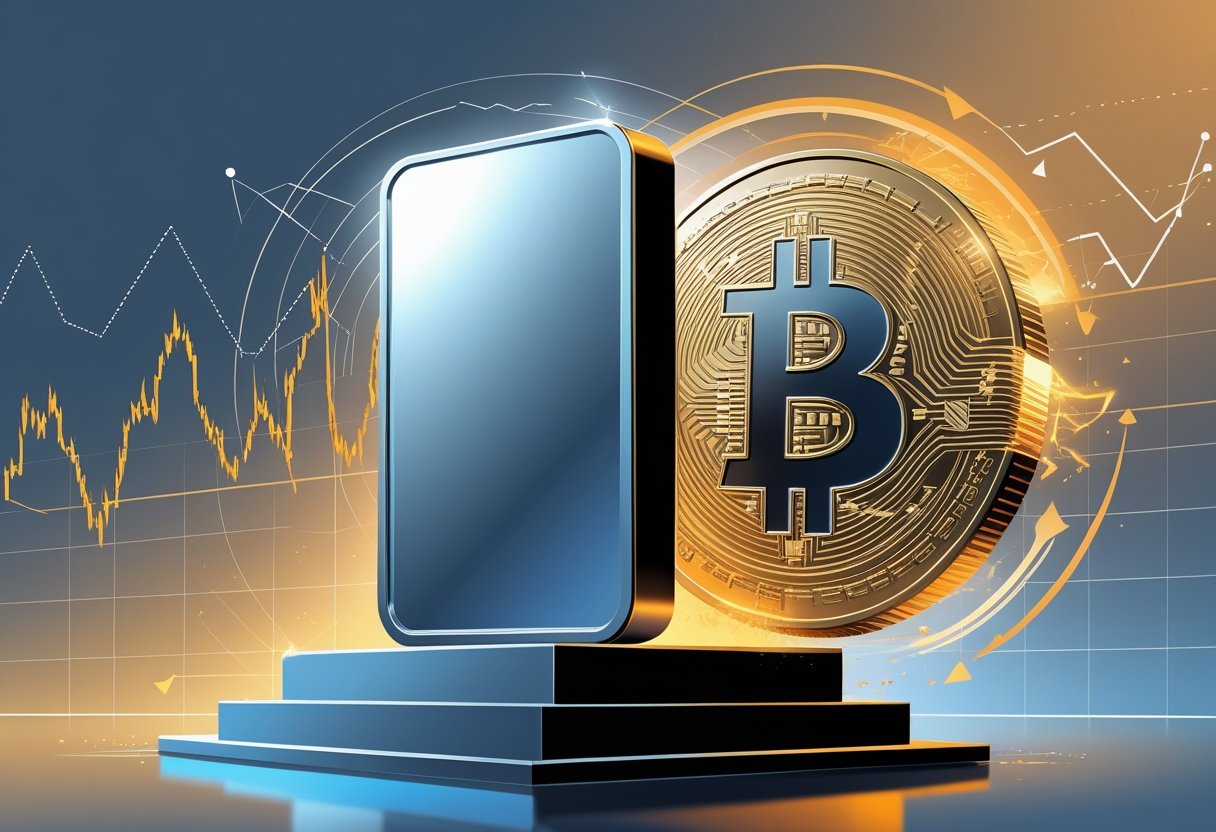
Silver and Bitcoin differ significantly in how their prices move and their reliability over time. Understanding their price fluctuation patterns, market maturity, and ability to maintain value helps investors gauge which asset aligns better with their financial goals.
Price Fluctuation Patterns
Silver’s price tends to fluctuate less sharply than Bitcoin. While it experiences periodic ups and downs, these changes are often driven by tangible factors like industrial demand and bullion investment trends.
Bitcoin’s price volatility is much higher, influenced by speculation, regulatory news, and shifts in market sentiment. Its daily price swings can reach double-digit percentages, which increases risk for short-term investors.
| Asset | Typical Daily Price Change | Volatility Driver |
|---|---|---|
| Silver | 1-3% | Industrial use, investor demand |
| Bitcoin | 5-15% | Speculation, regulatory changes |
This difference in fluctuations makes silver a more predictable and steadier asset in everyday trading environments.
Market Maturity
Silver benefits from a long-established market that has evolved over centuries. It is deeply integrated into manufacturing, jewelry, and investment sectors with well-understood supply and demand dynamics.
Bitcoin, by contrast, is a relatively new asset with a less mature market. It faces unresolved regulatory issues and fluctuating adoption rates, contributing to price instability and uncertain long-term outlooks.
The maturity of silver’s market provides investors with clearer signals and less speculative noise compared to Bitcoin’s more volatile and evolving ecosystem.
Store of Value Consistency
Silver holds intrinsic value due to its physical properties and industrial uses. This creates a consistent baseline for its worth, allowing it to resist large devaluations even during market downturns.
Bitcoin’s value is more abstract, relying largely on belief in digital scarcity and network security. This makes its store of value role more susceptible to rapid loss of confidence.
In practice, silver provides steadier protection against inflation and economic uncertainty, while Bitcoin offers potential growth but with higher risk of abrupt price corrections.
Accessibility and Ownership
Accessibility and ownership influence how investors interact with silver and Bitcoin. These factors affect the ease of purchase, security of holding, and control over the asset, which are critical for making practical investment decisions.
Ease of Acquisition
Silver can be purchased through multiple channels, including local dealers, online retailers, and exchanges. It is widely available in small increments like coins or bars, making it accessible for investors with varying budgets.
Bitcoin acquisition requires digital platforms such as cryptocurrency exchanges or peer-to-peer networks. While these platforms are numerous, newcomers face a learning curve regarding wallets, private keys, and transaction fees. Regulatory restrictions in some countries may also limit access to Bitcoin.
In terms of user-friendliness and simplicity, silver’s physical nature makes acquiring it straightforward, while Bitcoin demands technical knowledge and digital literacy.
Tangible Possession
Physical ownership of silver offers a sense of control and security for many investors. It can be held privately, stored in personal safes, and does not rely on digital infrastructure to maintain possession.
Bitcoin exists solely in digital form, stored in electronic wallets protected by cryptographic keys. Losing access to a private key means permanent loss of the asset. This intangible nature raises concerns about hacking, wallet security, and custodial risks.
Silver’s tangibility allows for direct possession, which appeals to investors wary of digital-only assets or potential cyber threats.
Decentralization in Practice
Bitcoin operates on a decentralized blockchain network, with ownership distributed across millions of users. This decentralization avoids reliance on central authorities and reduces counterparty risks.
Physical silver, while tangible, depends on third parties for verification, categorization, and sometimes storage when not held personally. This introduces elements of trust and custody risk that Bitcoin’s blockchain model seeks to eliminate.
However, owning personal silver bars or coins bypasses intermediaries, whereas Bitcoin requires technical infrastructure to participate fully in its decentralized ecosystem.
| Aspect | Silver | Bitcoin |
|---|---|---|
| Acquisition | Physical purchase, multiple outlets | Digital exchange, requires setup |
| Possession | Tangible, stored physically | Digital, stored in wallets |
| Decentralization | Trust and custody important | Fully decentralized ledger |
Investment Risks and Security
Investment in silver and Bitcoin involves different types of risks. Evaluating these risks requires understanding their technological dependencies, the impact of regulatory changes, and how each asset preserves value over time.
Counterparty and Technological Risks
Silver is a physical asset, so counterparty risk is minimal when purchased and held directly. However, risks arise if storage or custody services are involved, as these depend on the reliability of third parties.
Bitcoin’s risks stem largely from its digital nature. The technology behind Bitcoin, while robust, is vulnerable to hacking, software bugs, or loss of private keys. Investors rely entirely on digital security measures and platforms, making technological risks a crucial factor.
Both assets bear risks linked to their handling—silver with physical security and authenticity, Bitcoin with cybersecurity and digital access.
Regulatory Framework
Silver operates within a well-established legal and regulatory environment worldwide. Ownership, trading, and taxation of silver follow clear and long-standing rules that investors understand.
Bitcoin, as a relatively new asset class, faces uncertain and evolving regulations. Governments may impose restrictions, taxes, or bans that can impact Bitcoin’s accessibility and value. Regulatory changes can be abrupt, contributing to high market volatility.
This regulatory uncertainty makes Bitcoin riskier from a compliance perspective compared to silver’s stable framework.
Long-Term Preservation
Silver’s physical nature grants it intrinsic value and longevity. It does not depend on technology or electricity to retain value, and it can be stored securely for decades with proper care.
Bitcoin requires continuous technological infrastructure and access to digital wallets to maintain its value. Loss of private keys or long-term on-chain data integrity issues could threaten ownership or accessibility.
Silver benefits from tangibility and proven durability, while Bitcoin depends on sustained network and user security over time.
Potential for Growth and Diversification
Silver offers unique advantages in growth potential and portfolio diversification compared to Bitcoin. Its combination of industrial demand and historical stability creates opportunities for both defensive and growth-focused investors.
Portfolio Hedging
Silver serves as a hedge against inflation and economic uncertainty due to its intrinsic industrial value and long-standing role as a store of value. Unlike Bitcoin, which is highly volatile and driven mainly by speculative demand, silver benefits from consistent real-world uses in electronics, solar panels, and medical devices.
Its price movements tend to be less erratic, providing stability during market downturns. Investors often use silver to offset risks from equities and digital assets. Its status as a physical commodity also reduces counterparty and regulatory risks compared to digital currencies.
Opportunities in Emerging Markets
Silver has strong demand prospects in emerging markets where industrial growth is rapid. Countries increasing manufacturing and green energy production require large quantities of silver for technology and infrastructure. This creates sustained demand beyond speculative trading.
Bitcoin’s adoption in these regions faces challenges like regulatory hurdles and technological barriers. Silver’s tangible presence and widespread acceptance offer more immediate and reliable growth opportunities. Investors looking for exposure to emerging market expansion may find silver a more accessible and practical asset.
Environmental Impact and Sustainability
The environmental considerations of silver and Bitcoin differ significantly, especially in terms of energy use and how raw materials are sourced. These factors affect their overall sustainability profiles and impact on natural resources.
Energy Consumption
Bitcoin mining relies on a proof-of-work system, which requires high-powered computers to solve complex algorithms. This process consumes a large amount of electricity, often sourced from fossil fuels, resulting in a substantial carbon footprint. While recent studies suggest Bitcoin’s environmental impact might be lower than previously estimated, it still demands continuous, significant energy input.
In contrast, silver does not require operational energy for its use. Energy consumption is primarily associated with mining and refining. Silver extraction involves standard industrial processes that, although energy-intensive, operate at a far lower and more predictable scale compared to Bitcoin mining.
Resource Extraction Practices
Silver is mined from natural deposits in the Earth’s crust. Mining methods vary but often include environmentally sensitive steps like water usage, waste management, and ecosystem disruption. Improvements in sustainable mining practices, such as water recycling and non-toxic extraction processes, help mitigate these impacts.
The recyclability of silver also supports sustainability by reducing the need for new extraction. Bitcoin, as a digital asset, has no physical extraction but depends indirectly on the environmental footprint of energy sources used in mining operations. The fossil fuel dependence of many Bitcoin mining farms raises concerns about long-term ecological effects.
Liquidity and Market Size
Liquidity and market size are critical factors for investors assessing silver against Bitcoin. Each asset differs in how accessible it is to traders and the depth of market activity supporting transactions.
Marketplace Accessibility
Silver is available both as a physical asset and through financial products such as ETFs and futures. This dual availability allows investors to participate in markets that suit their preferred risk levels and investment styles.
Physical silver requires secure storage and handling, which can limit immediate liquidity compared to digital assets. However, silver’s presence in traditional financial markets makes it accessible to a broad range of investors, including those less familiar with digital currencies.
Bitcoin operates exclusively in digital markets, offering high liquidity with near-instant transactions globally. It can be easily traded on multiple exchanges 24/7 without the need for physical storage. This accessibility suits investors seeking swift trades but introduces a reliance on internet security and exchange stability.
Trading Volume and Depth
Silver benefits from large, established physical and paper markets, including coins, bars, ETFs, and futures contracts. These diverse markets contribute to consistent trading volume and moderate spreads, supporting reliable price discovery.
Bitcoin’s market size is primarily driven by price appreciation rather than supply growth, since its total supply is capped. Trading volumes tend to be high but can vary significantly due to its volatility and speculative nature.
| Asset | Market Features | Trading Volume | Market Depth |
|---|---|---|---|
| Silver | Physical + paper markets, ETFs, futures | High and steady | Broad, supported by industrial demand |
| Bitcoin | Digital-only, capped supply | High but volatile | Deep liquidity in crypto exchanges |
Role in Global Economic Uncertainty
Silver holds a distinctive place during periods of economic instability. Its dual function as both an industrial metal and a monetary asset influences its behavior in crisis scenarios and inflationary environments. This gives silver practical advantages compared to purely digital or financial assets.
Performance During Crises
Silver has demonstrated consistent demand during financial crises due to its tangible value and industrial uses. Unlike Bitcoin, which can experience high volatility and regulatory scrutiny, silver benefits from broad market acceptance and historical precedent as a store of value.
Industrial demand for silver—especially in sectors like solar energy and electronics—provides a baseline of consumption, preventing prices from collapsing entirely during downturns. Moreover, geopolitical tensions and weakening currencies often drive investors to silver, seeing it as a safer alternative to purely digital assets.
Hedge Against Inflation
Silver’s role as a hedge against inflation is supported by its finite supply and real-world applications. Inflation erodes fiat currency value, but silver often rises in price when purchasing power declines, protecting investors’ wealth.
Bitcoin also positions itself as an inflation hedge due to its capped supply. However, silver’s established market and industrial demand give it more predictable value retention in inflationary environments. Investors benefit from silver’s liquidity, physical ownership potential, and long history as monetary metal.
Future Outlook for Silver Versus Bitcoin
Silver’s future outlook is shaped by its dual role as both a precious metal and an industrial commodity. Demand from electronics, solar panels, and medical devices supports ongoing usage, creating consistent industrial utility. This contrasts with Bitcoin’s purely digital nature.
Monetary policy and inflation expectations heavily influence silver’s price. If loose policies persist, silver could benefit as investors seek tangible assets. Bitcoin, with its fixed supply of 21 million coins, is often viewed as a hedge against currency devaluation, but its price remains volatile.
Key differences include:
| Factor | Silver | Bitcoin |
|---|---|---|
| Supply | Near-infinite, mined continuously | Fixed at 21 million |
| Industrial demand | High, with widespread physical applications | None |
| Price volatility | Moderate, influenced by industrial and investment factors | High, driven by market sentiment |
| Regulatory risk | Lower, traditional asset | Higher, subject to evolving regulations |
Investors typically assess their risk tolerance and goals when choosing between the two. Silver is often seen as more stable and tangible. Bitcoin offers potential for high returns but carries greater uncertainty.
Some analysts suggest a portfolio blending silver and Bitcoin can provide both protection and growth. Silver’s real-world applications make it adaptable during various economic conditions. Bitcoin’s blockchain technology promises transformational shifts but remains speculative.